Reading Out Loud

Yesterday afternoon I read out loud to, well…. no-one in particular, really. I am participating in Newcastle Library’s program Out Loud as part of the National Year of Reading 2012. I even had a fancy chair to sit on. My timeslot was the last of the day, so with Crossing Paths marked with post-it notes I climbed up on the swish chair and began to read.

This was only my third reading of Crossing Paths, my first was last year at Sunset Books and ABC http://www.facebook.com/#!/sunsetbooks and immediately I realised what an easy book  it is to read from, mainly because of the Bookcrossing www.bookcrossing.com journal entries at the end of each chapter. Like mini reviews – these are perfect to dip into and were what I mainly read from at Sunset Books, Raymond Terrace.

My second reading, at Wangi Library’s Books and Biccies in January this year was really more of a booktalk. I spent most of the half hour or so explaining bookcrossing itself and how I used it as the framework of the book. The whole world of bookcrossing forms the structure linking the eight main characters together.

Today was quite different in many ways. It wasn’t so much about discussing the book as about reading out loud. At first I found it a little odd that most people were just walking past – choosing books and borrowing books and looking a little askance at me on the white chair but after a while I just forgot about everything but the words on the page. My timeslot was from  4.30pm to 5.00pm. After about ten minutes I began to read as a reader rather than an author and the experience was comforting somehow.

At some point I heard the Newcastle Town Hall clock strike but decided it must be the quarter hour. A little later one of the librarians came over to me and said: ‘You can stop now, you know.’
I said, ‘Oh, can I?’
She said, ‘It’s a quarter past five.’
I asked, ‘Really?’ and she told me that a lot of the authors reading out loud during the day had been surprised how quickly the time passed. She also commented on the wonderful atmosphere the readings created in the library. It was the first time I think I’ve read aloud without fear of judgement. There was instead the rhythm of my words and the joy of reading.

The Power of language and using the right words

I can be a ditz sometimes and very vague as my family and friends will tell you. I recently ordered a coffee whilst in the middle of writing a crucial scene. Fifteen minutes later no coffee. I went up to ask if it was coming and they told me it had been put on my table (behind my laptop) around ten minutes ago. Never noticed a thing! And then today two incidents – both hanging on single words – made me stop and really consider how much we actually take in even when we think we aren’t paying attention.

This morning  working on a new chapter I ordered a coffee (1/2 strength latte) and a bottle of water. The young waitress was standing by my table holding a bottle of water and she asked me did I want one cup or two. I answered: ‘Oh, I’ve already ordered my latte.”  She said: “No, the water.” I replied. “One glass please (as I was by myself). She put one glass down and I thought: Yep, I am a ditz and went back to my writing.

A moment later she moved to the table nearby holding another bottle of water and several glasses and said: “Did you want two cups.” And I realised what had happened. She’s obviously been brought up (although she sounded like a regular Aussie) calling glasses cups for some strange reason. For me a glass is what you put wine, water, soft drinks and liquor in. A cup is what you put tea, coffee and hot chocolate in but that was definitely what she called the glasses.

Move ahead to this evening at Brisbane airport. I have arrived and arrangements have been made for me to catch a connecting bus. On my itinerary is the instruction that when arriving at the airport I must report to the service desk of that company to be booked on the bus. Well I spent fifteen minutes looking for the service desk. There were the usual suspects of hire cars and transport companies but not the company I was looking for. I asked two Virgin employees and they had no idea where it was. I showed them my intinerary – no luck. Finally someone directed me outside and what I thought was a bus shelter for the regular buses was a booth with that company’s name under the roof.

Yes, I know. If I had put my glasses on I might have seen the name from a distance and walked down there but I didn’t because I was actually looking for a service desk which I think to most people’s minds is found inside whereas a booth is often outside. Hence my confusion. That’s language for you!

A lot of the time of course everything goes smoothly and we don’t stop and wonder about such things but when they don’t it’s amazing how the wrong use of language – in both these instances single words – can lead us astray.

As a writer I am very particular about word usage, especially those particular words that signify and are redolent of an era. In Tomaree I spent quite some time checking up “okay”, among other words. (My main character was Amercian.) In researching word usage of WWI for The Grey Silk Purse it is surprising to find that it was common when writing letters and diaries to use “&” for “and”. I’m not sure when that stopped. I mean we still do it occasionally but not as consistently as some diary writers from that time.

All this has brought me back to my writing and the question: Am I chosing the right words – the most effective words – to convey my story and weave a convincing web around my readers? I hope so! What I can safely say is that after today I’ll be extra careful!

In praise of secondhand bookshops and/or the search for the perfect book

Yesterday I was feeling out of sorts and terribly restless after a miserable Friday night so Saturday morning I was on a mission. I had to find the perfect book to keep me company. I wanted John Berger and I wanted him now, namely Here is Where We Meet: a story of Crossing Paths. I love the title. Obviously. (If this isn’t obvious see About Me).

Did my two local libraries have it? No! So off I went to Rice’s Bookshop, an institution in Newcastle, now in its 43rd year of trading. They didn’t have any of Berger’s books but I did find Rupert Brooke: Life, Death & Myth by Nigel Jones. God knows when I will get to read it as it is 461 pages long but it looks much more approachable than another biography I have of the famous poet, the man who many people considered to be the most beautiful in England.

Brooke has fascinated me for a long time and in 1997, after I read a collection of his poems, in particular his last entitled Fragment, he began to haunt my thoughts for weeks. Eventually I exorcised him by writing a long poem entitled Conversation with a Dead Poet.

Anyway, no Berger but a good book to read. Undeterred I headed off to Indigo Books further up Hunter Street. There I found a number of Berger’s but not the one I wanted. The excellent To the Wedding was there but I have read that and there were two others that didn’t interest me and were not the perfect book for a grey Autumn Day.

I  did find three possible contenders though, all short books and two authors unknown to me. The three books I bought from Indigo were another Ian McEwan,The Comfort of Strangers, one of his early ones; Waiting for Leah by Arnost Lustig, a Czech author writing about a Nazi prison camp in northern Bohemia in 1944; and The Quartet by Francois Emmanuel, a writer and psychiatrist from Belgium. One of his novels won the Prix Victor Rossel. This novel is about a sinister dossier and the links between big business and the darkest hour of Europe. Thank God for secondhand bookshops.

You will – eventually – find my reviews of all four on goodreads, the three short ones in the not too distant future. (Reviews done 31/5/12).

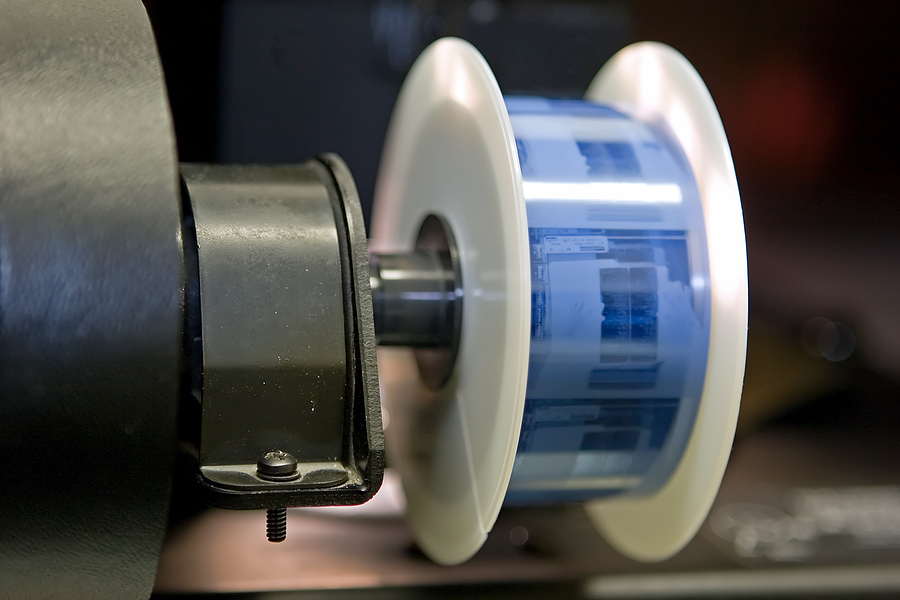
I hate Microfilm readers!

Firstly, I can never feed the film on and get it started. It takes me forever. I am not very co-ordinated and as I struggle with the stupid reel I feel like I’m back at school. Secondly I need the print quite large so I spend my time going up and down each page so I don’t miss anything. And guess what? After half an hour of winding and bobbing up and down I’m suffering from motion sickness. So, not surprisingly, I only lasted an hour reading the October and November issues of the Newcastle Sun, 1917 yesterday morning but found a lot to giggle over.

One of my favourite things is something called Men and Women Personal Paragraphs with snippets of information such as: “Mr and Mrs Penny returned to Newcastle from Inverell today.” Or try this one: “Mr and Mrs  P Gordon Campbell of Mayfield are spending a short holiday in Inverell.” Good to know!

And then there are strange ads for weird things like Fishers Phospherine, the Misses Tidey and Tinsley selling hats, Parisian Designed Frocks. Yes please. (Actually they didn’t look bad). There was a Mme Petrona in the movie The Panther Woman which sounds like it might give Sex and the City a run for its money and a news item entitled “Twice married woman thought husband dead.” I suppose she thought it was worth a try!

By this time I’m totally over the dreaded microfilm readers and haven’t found any ads for two cafes I know existed in Newcastle in 1922 – Tyrrells and Mitchisons. No more torturing myself on the reader. Instead next Saturday I’m going to do some research old style. I’m going to be flipping through newspaper clipping books, turning the pages leisurely and not listening to the crank of a microfilm reader.

Thank God for the snippers club at the Newcastle Family History Society at Lambton. They are a group of enterprising women who meet, chat and patiently snip out domestic and miscellaneous newspaper articles from the Newcastle Morning Herald and other local papers. Yes, I’m going there next Saturday morning and you might not hear from me again for weeks. After all I went there two years ago looking for the New Moon Dance Club who hosted the 1930 New Year’s Eve Dance Party at the Trades Hall in Newcastle and instead stumbled upon an article about a lost silver purse that inspired my current work in progress!

Lost in Time

People don’t change over the years but the environment they live in does. When Ishobel Ross, a cook from the Isle of Skye, arrives in London in July 1916 it is amazing how much she gets up to in the city without a car! She is sightseeing – taking in the theatre, a trip to Aldershot, shopping at Selfridges, visits to St Pauls, Marble Arch, and tea at Fullers. The list goes on and I’m exhausted reading it. Finally on the 29th she writes “Got word today (from the Scottish Women’s Hospitals) to report at Victoria Station on Tuesday morning.”

Got word? How? Obviously not by SMS or mobile call but I’m left pondering the alternative. Did the SWH ring Ishobel at her hotel? Send a telegram? From my research into the Twenties in Sydney it is amazing to someone from the 21st century how often they got mail in the early part of the last century: twice in the metropolitan area and for a time a delivery on Saturday which beggars belief. Telegrams too seem to arrive very quickly, including the dreaded ones from the War Office – “We regret to inform you…”

Did the SWH send a boy running through the streets of London with a message? Who knows? There is, of course no way of knowing now. As they say “you had to be there.”  And taking that line of thought I can imagine a 22nd century historian possibly stumbling over emails, letters, the odd diary, containing such lines as: “Met this great guy last night. Too good to be true so I googled him.”

Google may be around for another 100 years. Or it may be lost in time in the way of “got word” and “shanks pony” – a term my Mine Manager/diarist great-great grandfather Richard Pope frequently used in the 1880s. “Took ‘shanks pony’ into Silverton from Broken Hill.” A special breed of horse you are wondering? No, it means to walk. So there you are, you were way off course just as I maybe off course when I speculate on Ishobel’s “got word”.

The past is another country. They definitely do things differently there.

Virginia Woolf and I

We go back years! I first came to her writing because of A Room of One’s Own. I read it (like most women do) when embarking on my writing career. It was actually very sound advice and when I came to buy my first home as a single woman I was going to have that study if it killed me! I got the study at Eleebana and I now have one in my new home but not enough bookshelves I’m afraid. I now have boxes and boxes of books in the garage but I have somewhere to write besides my favourite cafe.

Last week I discovered that Virginia Woolf not only gives good advice but can be relied on in regards to the weather. A few weeks ago I started writing a new chapter entitled The News (all of my chapters have titles instead of numbers) and when describing the weather wrote: “It was cold but sunny.”  A very hopeful statement on my part I thought having lived through a London winter so I made a mental note to somehow check the actual weather for the 15 December 1917 later on. A few days after this I discovered there were actually two bombing raids in London that month which had me reeling in a orgy of research; as you do when an unexpected real life event turns up that puts a new twist on your writing.

After finding a marvellous book on the WWI blitz by Ian Castle http://books.google.com.au/books/about/London_1917_18.html?id=siHifpXFa6kC&redir_esc=y I looked up which library held the first volume of Virginia’s diaries (not for loan) and at Newcastle Library I sat and read her first words for the 15 December 1917: “A cold but sunny day.” Thank you Virginia!

And another thank you for an account of the first of the bombing raids on 6th December which helped me to bring my character’s account to life. According to Virginia’s diaries she was awakened by L to a most instant sense of guns. “As if one’s faculties jumped up fully dressed.” She goes on with a very vivid diary entry for the morning’s events.

As I said, Virginia and I go way back and I’ve now gone back further with her as I have begun to read her very first novel Melymbrosia written in 1912. http://www.goodreads.com/book/show/741136.Melymbrosia

London, December 1917

As a single woman in 2012 I often look around and wonder where all the single men of my age are. I should not complain! Imagine living in the UK, the US or Australia during the last year or two of World War I (or any major conflict for that matter) and every day seeing maimed and disfigured young men back from fighting; trying desperately to adjust to their new lives as invalids. If you were in your early twenties during those years it was highly probable that you would remain single – so many future husbands lying in cemeteries in Europe instead of alive and well and looking to the future.

In my manuscript The Grey Silk Purse Phyllis has just encountered, in a Sloane Square cafe, one such disfigured young man:

‘When I glanced towards the young man his face took my breath away. It was ravaged beyond belief. One eye appeared to be sewn shut and part of his face from his left forehead down was gone. In that instant I also noticed that his nose looked strange and his lips were shiny and bulbous.’

My character manages to stay calm. I don’t think I would have been able to. During the latter stages of WWI young men such as these were given new faces at The Tin Noses Shop as the Tommies called it – the real name being Masks for Facial Disfigurement Department at the 3rd London General Hospital. There was also some marvellous work being done at Sidcup by pioneer plastic surgeon Harold Gillies  http://en.wikipedia.org/wiki/Harold_Gillies and during WWII Archibald McIndoe, Gillies cousin http://en.wikipedia.org/wiki/Archibald_McIndoe who worked for the Royal Air Force and  operated on badly burned aircrew.

During WWII my English aunt who was a WREN was stationed near the hospital where McIndoe operated and was instructed to smile and not flinch when she encountered the aircrew wandering the grounds, recuperating after their operations.This memory of hers relayed to me is the inspiration of the scene I just completed today – art immitating life.

The World’s Worst Travel Agent

Yes, that’s me when it comes to moving my main character from A to B, ie England to Salonika during the last few days of 1917 to early 1918. Should I have her spend most of the travel time on board say, a French liner/hospital ship with the possibility of it being attacked by a submarine? During one week in April of 1917 55 ships were sunk in the Mediterranean. So maybe not…

Or then I can have her going overland to Le Havre, Rome, Taranto and then by ship via Corfu to Salonika but where did she stay on the way? On board the train or in small hotels? The mind wanders and at this rate she’ll never get there! She is stamping her foot in frustration and I’m dithering around like a maiden aunt. But then of course I know what is ahead of her: driving an ambulance along a torturous road with men crying out in pain in the back, freezing cold such she has never known in Australia, horrible sights that no-one should have to witness and young orderlies, VADs and nurses did witness, sometimes for years, more often than not working incredible hours that would compromise their health in later life. Yes, it’s all ahead of my Miss Summerville and I’m petrified for her. No wonder I am delaying sending her to Macedonia.

In fact I’m quite nervous about the writing of her Serbian diary. How did the real women live through it all? I am in awe of  women such as Sister Alice Kitchen who served through the whole of the war, Sister Ross-King who was awarded a Military medal for her bravery on the night of the 22nd July when her Casualty Clearing Station was bombed. And the wonderful dressing station sister Agnes Dorothy Kerr. Even just your average nurse who often worked up to 18 hours a day, particularly when  a convoy of wounded men arrived! They deserve to be remembered.
http://www.theage.com.au/news/opinion/lets-remember-the-bravery-of-thousands-of-australian-nurses/2007/04/23/1177180564828.html?page=fullpage

Now it’s back to getting my girl over there and into action. I know she is going to be fearless!

Making a Submission

It’s an awful word really for what is an already an often terrifying ordeal. Submission. It’s down on your knees, saying please, please. That’s why I’d rather say I made an application yesterday for a writing fellowship. Scary stuff but it has to be done to put myself out there and find a mainstream publisher. I won’t say where to at the moment but it is actually a place. A place to get your foot in the door but more importantly write uninterrupted for a week in a wonderful location. Gardens, bushland, peace and quiet.  More importantly, meals fixed! Yes, this place is real and it’s reassuring to know it does  exist. Bliss has a name!

When you actually think about it, a writing life is a very strange way to live. I’ve been living this life for thirty years now and both my children (11 years apart) just thought Mum was a bit weird. Thirteen years ago when I moved up north and bought a new house as a single mum, I decided I was going to have a study  (a Room of My Own) even if it killed me. I even managed to get a wall to wall bookcase. I have another house now but unfortunately don’t have that wonderful bookcase and strangely enough find I do most of my writing at cafes these days. Not sure why exactly but escape is a factor. You know, at home you have housework waiting for you, dogs to be walked, a garden to tend to. At a cafe all you can do is to talk to friends, write or read.

When I think about it, behind most of my “submissions,” has been the desire for fame and fortune (of course) but also the desire for more time to write. A bit of money coming in so that I don’t have to work forty hours per week AND WRITE. Instead, say, three days a week with two to do my writing. A dream? Maybe but it’s lovely to have something to aim for and gives me the strength to make these submissions.

Wish me luck!

Writing Challenges and Passions

When I’m writing two very important things have to be there for everything to fall into place. 1. The writing of the manuscript has to challenge me in some way and 2. I  must be passionate about my subject matter. The Grey Silk Purse is my sixth book and both these things definitely apply. In my earlier novels this wasn’t quite so obvious to me. I was just writing a book! But now after writing prose for thirty years, themes and concerns do become clearer.

With my first novel, just putting my ideas down was enough of a challenge. I mean could I even finish the damn thing let alone write coherently? With my second novel this was even more true because I began writing the enormous (still unpublished second manuscript) when my second child was five months old. I have vivid memories of Elise in a capsule and me struggling to borrow a heap of library books before she screamed the place down. And later of clasping her as a toddler between my legs to stop her from crawling off whilst I desperately tried to finish some photocopying for my research into the Broken Hill Proprietary Co.

With my third manuscript the construction of the novel defeated me (for the moment) but themes were emerging. Themes of loss – loss of place, loss of memory. Of abuse and madness. With my first published book (and fourth manuscript) Tomaree the writing challenge was how to blend the past with the present; how to move smoothly from 1942 to 1972 and back again many times. Luckily the passion kicked in (a passion to raise awareness of the wonderful Australian GI brides who gave up everything for love).

For my last novel Crossing Paths, the challenge was enormous! To create eight very different characters and give them succint personalities. I’m not sure that I succeeded but I gave it a fair old try. And the passion was of course for the wonderful world of BookCrossing.

Now I am facing a new writing challenge and it is quite daunting – to recreate life as an  ambulance driver working in the Macedonian front of 1918; my passion to highlight the wonderful work of the Scottish Women’s Hospitals and other heroic women such as the Australian Olive Kelso King.
Wish me luck!!