Where is the red door of Notre Dame?

This is also a Substack post. In late 2024, around the time Notre Dame in Paris was preparing to open to the public again, I was “virtually” walking around the magnificent building with the aid of maps and old photographs. Of course, the position of all the doors and beautiful rose windows have not changed in over one hundred years but still I couldn’t find the exact position of the red door.

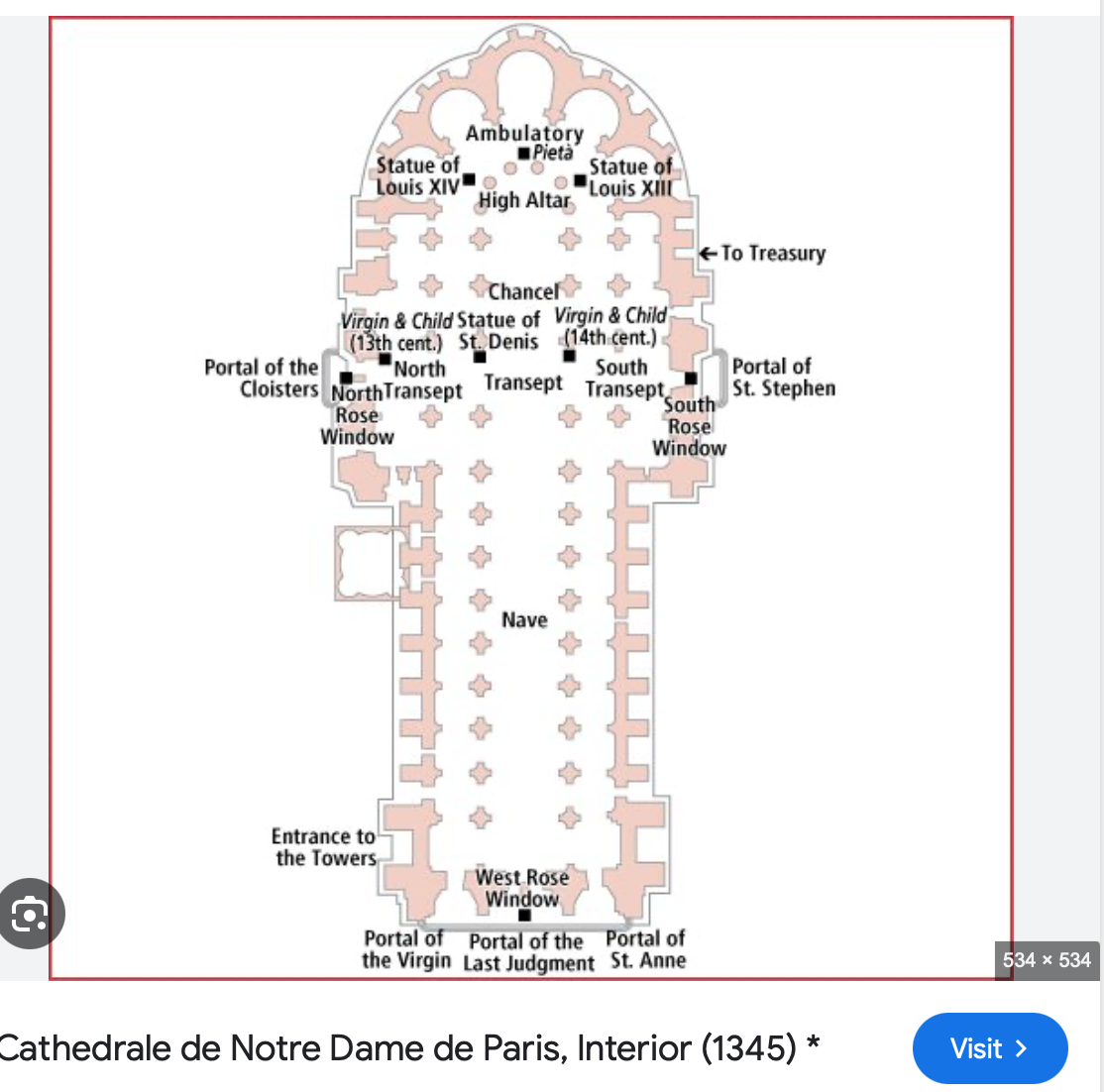
Finding the door, I believed at first, would just be a matter of studying a few layouts of Notre Dame and there it would be. This didn’t prove the case. In the picture above you will find one of many such layouts of the cathedral that don’t list the rouge portal.

Over several weeks I searched articles on the cathedral and even recent photographs. No red door. I began to write the scene anyway. My main character Sarah Montague is with her friend Lilith. Together they are going to visit a number of places in Paris that Sarah’s grandmother sketched back in the 1870s. They begin with Notre Dame and start their walk around the magnificent cathedral below the soaring buttresses.

They walk along the quai past the Portal of St Stephen and the South Rose Window. And then around to the magnificent Western Façade with the three portals: the portal of The Last Judgement in the centre, the portal of the Virgin on the left and the portal of Saint Anne on the right. By this time, they are half way around the building with no sign of the red door. They pass the Portal of the Cloisters and the North Rose Window and just beyond, nearly finishing their circumnavigation is the red door. 

I was able to confirm the position with a bright orange and yellow floor plan I found only four days before Notre Dame opened to the public. There it was – the portal rouge. Just before the curve of the Choir section of Notre Dame. A recent photograph confirmed the position. 

I went back through all my saved images to write this essay and discovered I had missed the red door early on in my research because it was marked as portal rouge. And I initially (and stupidly) wasn’t looking out for that name. I’ve also noticed that I missed a reference to it being on the north side. I have to admit that map reading is not my strong suit. 

I definitely know where this magnificent door built around 1270 is now, with its deep red colour and the four figures and an angel above the lintel. But I feel that having so much trouble finding the door made me really get to know the cathedral in depth. And I am thankful for that. 

Finding the grave

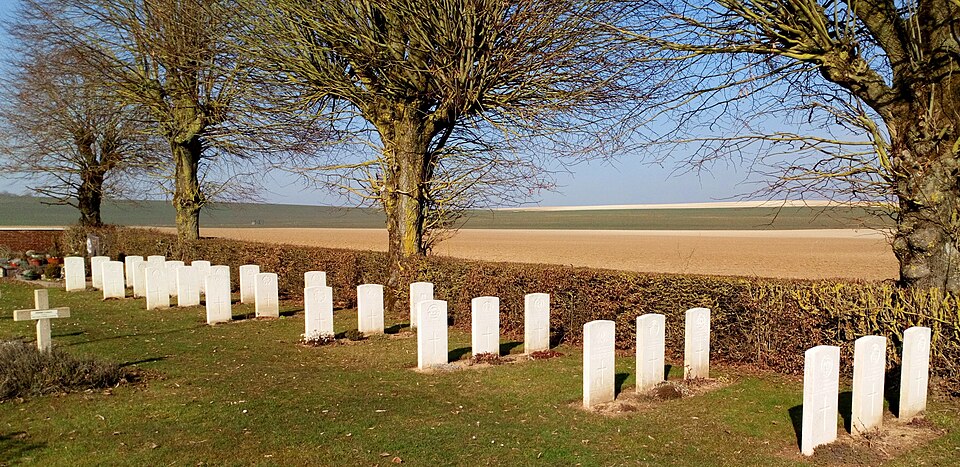
This is also a substack post. Late last year I finally got down to writing a chapter where my character Sarah visits a cemetery in Northern France where her brother is buried. He was killed in the First World War. When I began planning how the visit would unfold, I luckily had a very clear map, (see above) and from the Commonwealth War Graves Commission was able to download a listing of all the 1,997 soldiers buried there. But where would he be? What part of the cemetery?

From the map you can see it is divided into 9 sections marked with roman numerals. Funnily enough there is no section 9 but I quickly realised that I couldn’t just pick any section. It had to be where real-life soldiers of Eddie’s battalion, the 45th would have been buried. And after studying the excel sheet I realised that the country and the date of death were also a factor. 

Importantly, even though this is Dernancourt Communal Cemetery Extension and the two battles of Dernancourt were fought in March and April of 1918, there were many other soldiers from Australia, New Zealand and the United Kingdom buried there from nearby battles, sometimes two years previously and up to the war’s end. 

How was I going to work out the most likely section for Eddie? I started making notes of the different battalions that were buried in each section working through the list alphabetically but I could see that this was going to take forever. I also had Sarah’s friends, Randolph and Clarissa wandering around with her trying to find their nephew who was from the 48th. Two battalions to watch out for.

Of course, I didn’t want them finding Eddie and I didn’t want him found too soon as dramatically I needed the tension and the distress of seeing all the headstones affect all three characters. But how could I work it? I finally come up with the idea of reorganising the excel sheet by section. This gave me a sort of virtual reality tour of what all my characters would find section by section. The name, the dates and the battalions.

It quickly became apparent that soldiers buried in the sections on the left-hand side of the cemetery where Randolph and Clarissa are searching, were killed much earlier in the war. Just as Sarah begins to realise, as she wanders through the later sections, VI, VII, and VIII, that she is going to be the one to find Eddie. 

With all this new information, including what was on the headstones and some of the inscriptions, the scene began to take shape and I realised that this was becoming a major chapter in the novel. The denouement in fact. (When I had only planned for it to be a fleeting incident.) I hope I have done the scene justice. Especially for those people who have actually gone to visit an overseas cemetery where a family member is buried.

Dreading visiting the Grave

Image courtesy of Wikimedia Commons

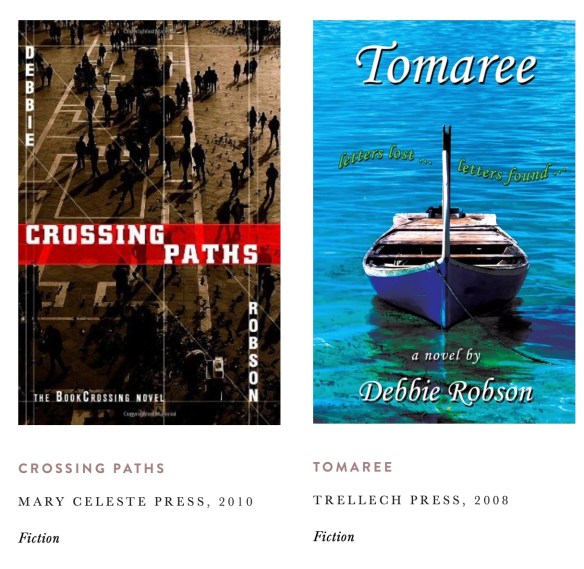
For the first time in over thirty years of writing long prose I have actually taken a moment to make a note of the last few planned chapters of this manuscript I am now calling Towards Paris. It is the second manuscript featuring Sarah Montague in a possible planned series. She first appears in Tomaree as a secondary character in 1942, but for this second book set in the 1920s it is 1924 and she is the star. The first book has the working title of Paris Next Week.

Here are the planned last few chapter titles in Towards Paris. The first one I am three pages into:

Another Two Lists
The Grave
Derbyshire
The Voyage Home
Highcliffe

Instead of researching the Dernancourt Communal Cemetery, I am working out an itinerary for a short trip around a few Derbyshire towns. I am looking at photos of Bakewell and Ashbourne instead of trying to work out what would be written on her brother’s headstone, other than name and rank. I can’t seem to tackle the reality of visiting such a place, even in my imagination.

Just like Sarah, I’d rather be anywhere but at the cemetery, facing her grief and loss. For anyone, even a fictional character, it is tough to visit the battlefields and cemeteries of WWI and WW2. I don’t know how immediate families managed it.

MY FOUR BOOKS!

Image courtesy of Blood Tree Literature

Anyone who is a writer and has their works published up on Amazon will know now hard it is to see all your books displayed at the one time. You can search for one book and it will come up. Oh, there it is! You go back and search for all your books, click on the link and one is always missing. At least that is what has happened to me and is still happening. A Glimpse is missing from my books and I know I will have to battle to get it added so that they are all displayed.

So you can imagine my surprise when Blood Tree Literature invited me, as a former contributor, to submit a piece for Issue 15. They accepted my cnf piece and I’m looking forward to receiving this lovely issue soon. After I received the news my piece had been accepted I investigated their contributors page, clicked on the link and discovered my four books (as I can’t display here on WordPress) staring back at me in date order from right to left in a very elegant design with a link for my website and instagram. A truly rewarding moment as a writer. Please check out this wonderful magazine.

It’s Publication Day of my chapbook!

Image and link courtesy of;Boats Against the Current

I have been very fortunate indeed in finding my publisher McKenna Deen. She originally published two of my poems in her magazine Boats Against the Current and I was so happy when she accepted my poetry chapbook recently. And now it is out in the world. Thank you too to my good friend Matthew Ward who took the amazing photograph of King Edward Park and to my poet friends, Jean Kent and Jenny Wong for the blurbs on the back. I am so proud of this chapbook and hope others enjoy it!

The tricky task of killing off a character

Image courtesy of Wikimedia commons

Yes, that’s where I’m at. She has just got to go. Part of me is surprised but the other half sort of knew all along that my main character’s best friend would not survive the second book of a planned series Towards Paris.

After all, my main character Sarah Montague is a crossover character from my novel Tomaree where we meet her at age 38 living in Shoal Bay, Port Stephens, far away from the glamour of Paris or even Sydney.

At the moment though it’s 1924 and Sarah is about to turn twenty and she is trying to find a new life for herself in Paris. Earlier her best friend Louie eloped with a young Jewish man and the couple are living somewhere outside of Paris.

Now I have to sort out the how and the where. I’m thinking some sort of heart disease and maybe Sarah will find her best friend severely ill at a sanatorium in the alps. I am having fun playing with different scenarios. For the details you’ll have to read Towards Paris when it comes out!

The Hermitage is at The Lighthouse!

Yes, that’s my novella The Hermitage. I am pleased to announce that it is now for sale at $18 at The Lighthouse shop on Saturdays and Sundays between 10-4 when there is an exhibition on.

First edition copies are also available at Flying Spanners Gallery open Saturday, Sunday and Mondays for $15.00 and second editions are also available at MacLean’s at Hamilton. As well as Amazon.com.au my book is available through me for $20 including postage. Simply comment below.

Trouble with palm trees

Image courtesy of the State Library of New South Wales

So, I have spent a ridiculous amount of time today trying to find out when the palm trees in Bridge Street were removed. I’ve been through blogs, endless google searches, at least an hour at the City of Sydney Archives, eBay, Alamy you name it. It sounds trivial but I need to know the date so that I can place a flash I have written, chronologically, in my collection. For the moment their loss features in my just written flash but now I’m obsessed with the when.

I had heart failure earlier in the day when I found a postcard featuring the palms dated 1958, a date that completely rules out the flash from being included in my collection. But I’ve since found the photo below dated by the Sydney Archives as 1954 with no palm trees. So hopefully the trees were removed sometime in the early 1950s. It’s strange but there are not very many photos of the street in the 1940s. Because of the war perhaps?

You will see that the distinctive Burns Philp building features in both photos. I have also “asked a librarian” at the State Library the question so I will keep you posted on the outcome. In the meantime I’ll probably still be searching in my sleep.

Image courtesy of the City of Sydney Archives

Update: I heard from Kate, a librarian at the State Library, on the 22nd December and she confirmed through various newspaper articles that she found in Trove that the palm trees were chopped down in August, 1946. I’m not sure what I did wrong when searching Trove but I had no luck even though I tried “Any of these words” and “All of these words” for palm trees Bridge Street. Here is a small newspaper article:

Image courtesy of Daily Telegraph 26/8/46

And time marches on and over the intervening years so many more trees have been cut down in the name of progress.

It’s Publication Day!

As my review on Goodreads says:
“I’m putting five stars as I’m very proud of this small book. The house featured in the Hermitage is inspired by four houses. They have all mingled and become one: The Hermitage at Healesville, my grandparents house at Kareela Road, Cremorne, the house in The House that Beckons by Gladys Lister and The Hermitage at Vaucluse.
I originally began writing this as a screenplay way back in 2009 but couldn’t tie up the ending. A few years ago I managed to finish the ending and cut The Hermitage in length to be eligible for a renowned radio play competition. A bad move.
Only a year or two ago I decided to look at The Hermitage again. I restored the deleted passages, added more and turned it into a novella. I hope my readers enjoy it.”

Here is a link to my publisher’s blog Alien Buddha Press where you can read the first chapter.

Here is the book at Amazon.com

Happy reading!

Characters as travelling companions

Image courtesy of Wikimedia Commons

I have returned to my manuscript Towards Paris. The writing has been interrupted because of illness, injury and my mother’s worsening dementia so it has been a relief to finally catch up with my character Sarah Linden, nee Montague.

            She has arrived in London after a five and a half week voyage from Australia and is planning some sightseeing over the next few days. She is about to book into a boarding house on Montague Street and will be picking up her pass-book from the Orient Line office on Monday. In the meantime she will do some sightseeing just as I did fifty two years later. Unlike me, my character is gay and, as a lesbian in the 1920s, life can be a bit tricky but she has a lot of things to do other than meet a woman friend. She has a trip to France to plan and a visit to Chelsea to meet her best friend Louie’s uncle. Hopefully he will have a recent address for her. In Paris Next Week Louie married a Frenchman and they are living somewhere on the continent. Louie has not been the best of letter writers.

            Although I know I am dictating Sarah’s movements with my writing and research, it often doesn’t feel like that. It feels more like I am visiting her in the 1920s. I’m giving her odd bits of advice, putting the odd challenge in her way and I’m sure together we will enjoy London. I’ll be her confidante as she negotiates her new life in London and Paris. It’s all very exciting and like a beloved friend’s company, I find it soothes me to spend time with her. If that makes me odd, so be it, as Sarah would say.