What I’m currently reading and/or am about to read or are on my bedside table.

Yes, I know it’s ridiculous but what can I say? And you haven’t seen my TBR (to be read) pile yet. I’m a bookcrosser – lakelady2282 at www.bookcrossing.com and things can get out of control. Goodreads – www.goodreads.com doesn’t help either. According to goodreads I am currently reading 8 books. Seven of those are pictured above and the eighth is Dracula which I began reading about two years ago whilst at work (at a job where there was nothing to do).

Wikisource http://en.wikipedia.org/wiki/Wikisource is wonderful for this. You open up the book on your computer screen, say The Scarlett Letter or Sense and Sensibility (making sure the chapter heading is not showing and it looks like you are reading some sort of detailed manual). Perfect! It’s how I read both the last two books.

As to the pile pictured above – well let’s see. I started The Facing Island by the historian  Jan Bassett ages ago. It is about WWI so it should be a priority to read but somehow I still haven’t got around to it. I know I will though.There’s With My Body by Nikki Gemmell which I keep interrupting to read other books, mainly because it’s too heavy to take to work (to read in my lunch break). And then as you will have spied by the familiar cover there is Fifty Shades of Grey by E L James which I have pretty much abandoned like a hell of a lot of other readers…evidently. I keep thinking I might get around to reading at least to the heavy BDSM section but always end up reading something else.

Also on the goodreads list is Early One Morning by Robert Ryan. The book is about SOE (Special Operations Executive) agents in WW2, a subject I’m really interested in and I should finish this book soon. Reveries of the Solitary Walker by Jean-Jacques Rousseau I began (before I finished any of the other seven) so I could send it out on the VBB (Virtual Book Bag) 1001 (1001 Books You Should Read Before You Die) being run by a lovely bookcrosser. There’s And So Forth an excellent collection of essays by the erudite Robert Dessaix (but I don’t always feel like reading essays so it’s still not finished). And lastly The Collected Wisdom of Florence Scovel Shinn which I dip into every now and then.

Now we come to the remainder of the books pictured. These are the ones I lugged home from Speers Point Library yesterday.I still need to research Australian nurses during the First World War so I borrowed Nightingales in the Mud by Marianne Barker. I am also currently trying to find a few books that my character Phyllis Summerville is reading and sharing with other passengers on board ship to England in September 1917. The 1001 book is useful for this. D H Lawrence is also very useful as I wanted a few risque books. The Rainbow seemed perfect until I found out it was banned for eleven years. I chose Sons and Lovers and his first novel The White Peacock (the small orange book, top of the right pile). I won’t use the latter. I’ll probably settle on Sons and Lovers for its shock value but I need to check this so will scan through the book. That’s three down of the second lot. I borrowed The Thirty-Nine Steps by John Buchan because that’s the book Phyllis actually chooses to read instead of the Lawrence (so now I need to re-read it). When I chose the Buchan book from the stacks out the back I discovered Singleton’s Mill next to it by an Australian author Sinclair Buchan. (It’s the book on the top of the left pile.) I just might have to read this book too.

The River Baptists I especially ordered from the library after hearing Belinda Castles speak at This Is Not Art last weekend in Newcastle. I googled her name and found out that this book is set in the Hawkesbury River, a place I know and love from my teenage years when my parents owned a Halvorsen cruiser. I am really looking forward to reading this book. It is high on my list to be finished first but its tied with the other book that was on display at the library entitled Why Not Say What Happened? a memoir by Ivana Lowell. Who can resist “a heartbreaking account of a gifted woman, her brilliant but destructive parents, and a glamourous, aristocratic life that was laced with arsenic”?

Certainly not me! So there is the complete list of the books pictured above which pretty much exemplifies my life at present – researching WWI whilst being distracted by sex (as such), the glamourous life (the grass is greener) and generally taking too much on!! What more can I say, except reviews to follow… I hope.

The Power of language and using the right words

I can be a ditz sometimes and very vague as my family and friends will tell you. I recently ordered a coffee whilst in the middle of writing a crucial scene. Fifteen minutes later no coffee. I went up to ask if it was coming and they told me it had been put on my table (behind my laptop) around ten minutes ago. Never noticed a thing! And then today two incidents – both hanging on single words – made me stop and really consider how much we actually take in even when we think we aren’t paying attention.

This morning  working on a new chapter I ordered a coffee (1/2 strength latte) and a bottle of water. The young waitress was standing by my table holding a bottle of water and she asked me did I want one cup or two. I answered: ‘Oh, I’ve already ordered my latte.”  She said: “No, the water.” I replied. “One glass please (as I was by myself). She put one glass down and I thought: Yep, I am a ditz and went back to my writing.

A moment later she moved to the table nearby holding another bottle of water and several glasses and said: “Did you want two cups.” And I realised what had happened. She’s obviously been brought up (although she sounded like a regular Aussie) calling glasses cups for some strange reason. For me a glass is what you put wine, water, soft drinks and liquor in. A cup is what you put tea, coffee and hot chocolate in but that was definitely what she called the glasses.

Move ahead to this evening at Brisbane airport. I have arrived and arrangements have been made for me to catch a connecting bus. On my itinerary is the instruction that when arriving at the airport I must report to the service desk of that company to be booked on the bus. Well I spent fifteen minutes looking for the service desk. There were the usual suspects of hire cars and transport companies but not the company I was looking for. I asked two Virgin employees and they had no idea where it was. I showed them my intinerary – no luck. Finally someone directed me outside and what I thought was a bus shelter for the regular buses was a booth with that company’s name under the roof.

Yes, I know. If I had put my glasses on I might have seen the name from a distance and walked down there but I didn’t because I was actually looking for a service desk which I think to most people’s minds is found inside whereas a booth is often outside. Hence my confusion. That’s language for you!

A lot of the time of course everything goes smoothly and we don’t stop and wonder about such things but when they don’t it’s amazing how the wrong use of language – in both these instances single words – can lead us astray.

As a writer I am very particular about word usage, especially those particular words that signify and are redolent of an era. In Tomaree I spent quite some time checking up “okay”, among other words. (My main character was Amercian.) In researching word usage of WWI for The Grey Silk Purse it is surprising to find that it was common when writing letters and diaries to use “&” for “and”. I’m not sure when that stopped. I mean we still do it occasionally but not as consistently as some diary writers from that time.

All this has brought me back to my writing and the question: Am I chosing the right words – the most effective words – to convey my story and weave a convincing web around my readers? I hope so! What I can safely say is that after today I’ll be extra careful!

On Memory

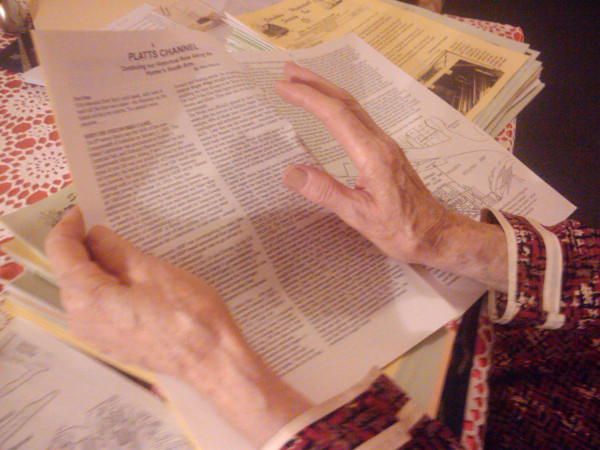
an island boatrower's hands

One of the things that drives me as a writer, my passion I suppose you could call it, is to recreate the past incorporating memories of those that were there or there through their parents’ recollections. It is very important to me to uncover these personal details that can make the past come alive – because not everything is recorded in history books.

Nine years ago I began interviewing many elderly residents of Port Stephens to help me understand what Nelson Bay was like during WWII for my novel Tomaree. This time I am writing about WWI so I am relying heavily on first hand accounts of people that of course have since died. Luckily, I have though, two helpers who are very much alive: Vera Deacon and Helen Marshall. Both have memories going back to the Thirties and Forties and as Mayfield didn’t change too much from 1920 until about 1935 or so, I am able to use a lot of those memories.

Vera Deacon is an island girl. She grew up on Dempsey and Mosquito islands – islands that no longer exist. (They have been covered in slag and turned into Kooragang Island). As a young woman she was always on the water rowing everywhere, along the channel, between the islands and to work at Mayfield. Her hands can be seen above – boatrower’s hands.

And Helen Marshall (who helped create the Mayfield walks) http://libguides.newcastle.edu.au/content.php?pid=251354&sid=2089250 has a prodigious memory going back to around 1933. Helen has been marvellous in helping  me map out three walks that my main characters Miss Summerville and Adrian Langley take in my novel The Grey Silk Purse. We have had some wonderful discussions about Waratah House and Argyle House, two properties that have been demolished years ago. We have also talked about the colour of Platts Channel, the way a gate faced surrounding Argyle House, also the Black Wharf off Ingall Street and Shelly Beach (both long gone). I only hope I can do her and Vera’s memories justice.

More Heroic Women

Now that my main character has just stepped ashore in England (on the 28th November, 1917) I have switched my research to find out more about the last year of the war. Along the way I have met more heroic women. I am only a third of the way through Women on the Warpath by David Mitchell but within the pages of this book I have already met some wonderful, inspiring women:

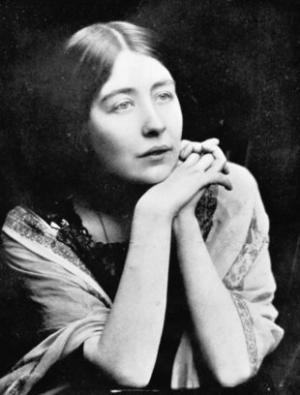
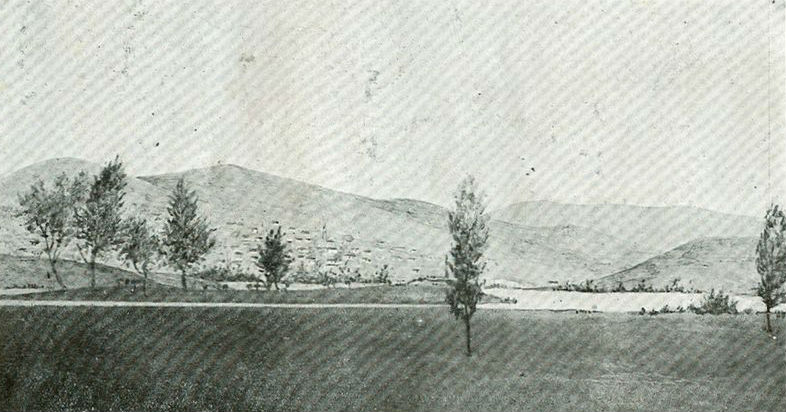
The indefatigable Pankhursts who took on Womens Suffrage (of course), the Huns and the Bolsheviks, particularly Sylvia who worked tirelessly for poverty stricken women in the East End of  London, among many other good works. Lady Muriel Paget who formed a hospital unit  that was sent to Russia. Lady Leila Paget who organised a hospital unit in Serbia and liaissed with the Bulgarians to open an emergency clinic in Skopje.
Sarah Macnaughton  who set up a soup kitchen at Furnes in Flanders and Mrs. St Clair Stobart who was the leader of a coloumn through the terrible Serbian Death March of late 1915.

One of my aims in writing The Grey Silk Purse is to highlight what it was like during WWI for women with a driving need to help others. It was a time when women really made a difference. Opportunities arose because of the war and the shortage of men, and these amazing woman and thousands more grabbed life with both hands and achieved startling results.

The Ostrovo Unit

Well, the mystery surrounding the massacre of what I’m guessing was an outpost of the Ostrovo unit, has deepened. No more details via Stella Miles Franklin and nothing at all in the biography of Dr Agnes Bennett by Cecil and Celia Manson. Nothing either in a referenced work Australians and Greeks, Volume 2 by Hugh Gilchrist. But it doesn’t really matter as I’m fairly sure the event occurred towards the end of 1917 – well before my characer arrives on the scene. Still it would help my writing to understand the historical context and how such a thing happened.

Despite this slight setback, I have actually been picking up some very interesting facts and historical details along the way: information about the day to day running of the unit, the politeness and old world charm of the Serbian officers, the large numbers of  Australian women who were doing war work at the Macedonian Front. Even the odd Serbian word as well, which may prove useful if my heroine happens to fall in love with a Serbian orderly. It’s a possibility!

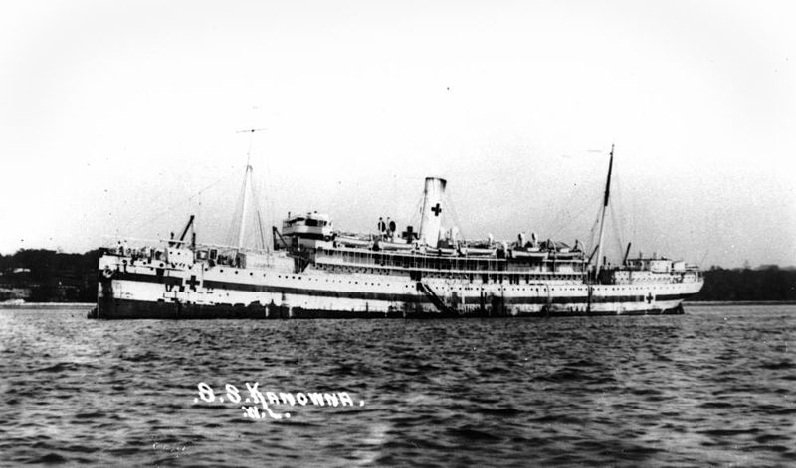
At the moment my girl is still on board HMAT Kanowna which has recently (October, 1917) stopped off at Durban and Cape Town. At this very moment (well today as far as  my writing goes – actually 15th November, 1917) she has just spent a few hours wandering around Sierra Leone before she must embark for the last leg of her voyage to England and a confrontation with her difficult aunt. Will post again when she arrives in London.

It’s a mystery

After posting my last blog a mystery has developed. On Saturday 13th July I spent the day at the Mitchell, after first viewing the World Press photos and the SMH Photos1440 http://www.sl.nsw.gov.au/events/exhibitions/2010/photos_1440/items/image05.html I went carefully through A History of the Scottish Women’s Hospitals by Eva Shaw McLaren looking for a reference to the tragedy at the Ostrovo Unit. Nothing. Just a mention of the unit being moved. Now I know from our excellent historian Susanna De Vries’s book Heroic Australian Women in War, in a chapter on Agnes Bennett and Lilian Cooper, that the skeleton staff of the unit were massacred by the Bulgarians and our very own Miles Franklin was referenced. I am waiting for my local library to get a copy of De Vries book that features Miles Franklin – The Complete Book of Great Australian Women for more details.

In the meantime I decided to go back again yesterday to the Mitchell and had a very interesting day. I went through two old directories (1914 and 1919) of the Newcastle, Cessnock, Maitland districts and also leafed through Flora Sandes’s two autobiographies. Sandes was the first woman to be commissioned as an officer in the Serbian Army. http://en.wikipedia.org/wiki/Flora_Sandes I also went through Stebbing’s At the Serbian Front in Macedonia – again no details of the massacre of the unit. The mystery deepens.

Lastly I went through the 1917 diary of Miles Franklin which proved to be fascinating – particularly descriptions of the camp. Matron was a terror evidently and the work in the kitchen exhausting. Unfortunately I ran out of time to read the 1918 diaries but am  looking forward to reading the chapter on MF in De Vries’s book and delving deeper into what happened to the unit.

Adventures with the Scottish Women’s Hospitals

Are writers paranoid? Well, it turns out I am. Six weeks ago I spent the day researching at the Mitchell Library. Most of my time was spent reading the diary of James Ray Lewis who was on board the the transport ship Euripides departing Sydney 31st October, 1917 but I also requested A History of the Scottish Women’s Hospitals by Eva Shaw McLaren. I was told very nicely by the staff of the Mitchell that the book was off site and wouldn’t be available for a few days. As I had caught the train down from Newcastle, I explained that I wouldn’t be back for some time to view the book again. The library staff told me to simply request the book online a few days before I needed it. No worries.

Last week with my writing going well, I realised I needed to do more research into the Serbian Front during WWI. It was time to request the McLaren book again. I logged on to the State Library and much to my surprise found this 1919 book was IN USE. Weird but that’s okay, it was a Saturday. Unbelievably someone was reading it. Tried on Monday. Again IN USE. The next day my imagination was turning feral. Who else was researching the Scottish Women’s Hospitals? Someone was planning a major novel with their heroine involved in the war in Serbia! OH MY GOD!

Rang the Mitchell today and was told, yes, it was still in use. Of course the penny dropped and I asked, “Did that someone happen to be me, Debbie Robson?” and they said yes. I explained I did request it some time ago etc etc. Very obligingly the staff have now organised the book for me for Saturday along with Eleanor Dark’s first novel Slow Dawning. Looking forward to reading up about the Ostrovo hospital unit but nervous too. The unit was very close to the action and I believe many of the staff were killed. Very daunting! Not sure if I’m up to the challenge (never mind the fact that the real women were) but I’ll find out soon.

On heroic women

At this stage it looks like my main character may be working at one of the units of the Scottish Women’s Hospitals. I have been reading about the amazing Olive Kelso King and her experiences in Greece and Serbia. I am staggered by what she achieved during her war service. I’ve also been researching the two Australian doctors involved with the SWH – Dr Agnes Bennett and Dr Violet Cooper. Suddenly I am nervous at putting my character into the middle of the danger and terrible working conditions of the Eastern Front in 1918. Never mind that these women actually lived and worked there! I am worried about having to face it all just on the page!

I am, unfortunately in some respects, very thin-skinned and was crying in a cafe last week when I read again about Vivien Bullwinkel and the massacre at Bangka Island. I mean I know that Vivien was the only survivor of 21 nurses gunned down at Radji Beach and I was okay when I first read about what happened but then was done for when I came to Matron Drummond’s word:

“Girls, I love you all and I’m proud of you. Walk into the water with your chins up. Don’t be afraid.” You can’t get more heroic than that!

Yep, it’s not going to be easy putting my character into a similar sort of danger. It’s going to be challenging not just emotionally but in getting the historical context accurate.  Now back to the past!

More problems with shipping

Well, I didn’t get to the Mitchell (State Rail doing track maintenance) but I did find a ship through the wonderful website AIF project. http://www.aif.adfa.edu.au:8080/index.html
Working between the AIF Project and the Australian War Memorial embarkation section http://www.awm.gov.au/research/people/nominal_rolls/first_world_war_embarkation/introduction.asp
I was able to find some details about the Hospital ship Kanowna. She departed Sydney on  25th September, 1917 and had nineteen doctors and six nurses on board. Definitely room for my character Miss Summerville to depart with them.

Now here is the new problem! After several days searching I was unable to determine that voyage’s ports of call or disembarkation. I couldn’t find anything on google, no shipboard diaries on Trove, the brilliant website of the National Library of Australia http://trove.nla.gov.au/ or the previous two websites. Peter Dennis of AIF had some  suggestions regarding the NAA http://www.naa.gov.au/ and finally their ISS Department came up with the answers: a logbook of the Kanowna, a two page document detailing the 7th voyage of the Kanowna and a book entitled Sea Transport of the AIF – all available to view in Sydney. Yay! So I’ll be back down there again soon!

Trouble with Shipping (and I don’t mean postage)

This is my first blog at wordpress and I’m planning to make regular posts on writing and networking. For previous posts you can catch me on goodreads.

For a month now I’ve been having trouble with my research for my novel The Grey Silk Purse. I need a ship to get my heroine Miss Summerville from Sydney to England departing October 1917. I’ve been through Trove to no avail. I can easily find details of say the RMSS Britannia departing Sydney, 14th December, 1887 with Mr P.S. Tomlin in command and Mr Peter Leverage officiating as purser on the voyage. Easy peasy! But for the year I want – not much else except the troopships and they are listed on the excellent Australian War Memorial webpage.

The penny didn’t drop until I spoke to Francis from the Vaughan Evans Museum at Darling Harbour. She informed me that shipping departures and arrivals were not advertised in the papers during wartime. Obvious now of course but gosh I wish I’d worked that out a few weeks ago, lol. She advised me to try the State Records Office and ancestry.com but it’s still going to be tricky. Hoping to come up with something in the next 36 hours as I’m heading to the Mitchell Library on Monday. Stay tuned.