Dreading visiting the Grave

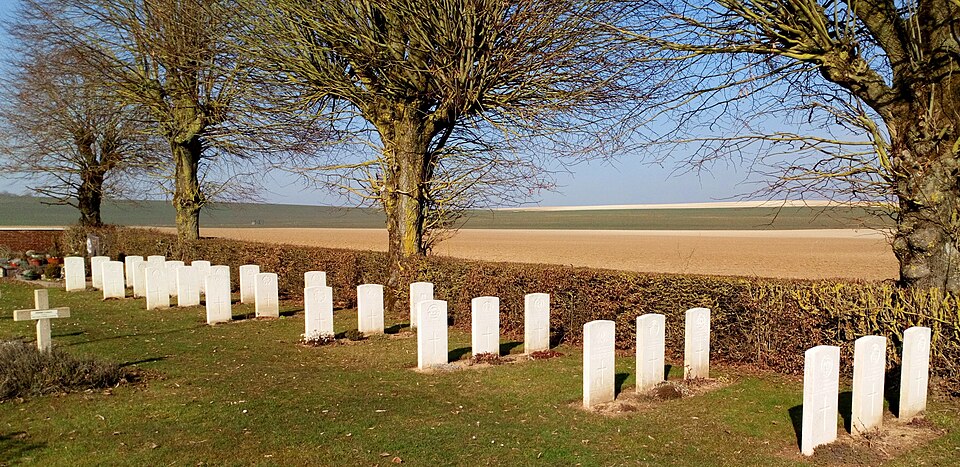
Image courtesy of Wikimedia Commons

For the first time in over thirty years of writing long prose I have actually taken a moment to make a note of the last few planned chapters of this manuscript I am now calling Towards Paris. It is the second manuscript featuring Sarah Montague in a possible planned series. She first appears in Tomaree as a secondary character in 1942, but for this second book set in the 1920s it is 1924 and she is the star. This book has the working title of Towards Paris.The first book has the working title of Paris Next Week.

Here are the planned last few chapter titles in Towards Paris. The first one I am three pages into:

Another Two Lists
The Grave
Derbyshire
The Voyage Home
Highcliffe

Instead of researching the Dernancourt Communal Cemetery, I am working out an itinerary for a short trip around a few Derbyshire towns. I am looking at photos of Bakewell and Ashbourne instead of trying to work out what would be written on her brother’s headstone, other than name and rank. I can’t seem to tackle the reality of visiting such a place, even in my imagination.

Just like Sarah, I’d rather be anywhere but at the cemetery, facing her grief and loss. For anyone, even a fictional character, it is tough to visit the battlefields and cemeteries of WWI and WW2. I don’t know how immediate families managed it.

Trouble with palm trees

Image courtesy of the State Library of New South Wales

So, I have spent a ridiculous amount of time today trying to find out when the palm trees in Bridge Street were removed. I’ve been through blogs, endless google searches, at least an hour at the City of Sydney Archives, eBay, Alamy you name it. It sounds trivial but I need to know the date so that I can place a flash I have written, chronologically, in my collection. For the moment their loss features in my just written flash but now I’m obsessed with the when.

I had heart failure earlier in the day when I found a postcard featuring the palms dated 1958, a date that completely rules out the flash from being included in my collection. But I’ve since found the photo below dated by the Sydney Archives as 1954 with no palm trees. So hopefully the trees were removed sometime in the early 1950s. It’s strange but there are not very many photos of the street in the 1940s. Because of the war perhaps?

You will see that the distinctive Burns Philp building features in both photos. I have also “asked a librarian” at the State Library the question so I will keep you posted on the outcome. In the meantime I’ll probably still be searching in my sleep.

Image courtesy of the City of Sydney Archives

Update: I heard from Kate, a librarian at the State Library, on the 22nd December and she confirmed through various newspaper articles that she found in Trove that the palm trees were chopped down in August, 1946. I’m not sure what I did wrong when searching Trove but I had no luck even though I tried “Any of these words” and “All of these words” for palm trees Bridge Street. Here is a small newspaper article:

Image courtesy of Daily Telegraph 26/8/46

And time marches on and over the intervening years so many more trees have been cut down in the name of progress.

Characters as travelling companions

Image courtesy of Wikimedia Commons

I have returned to my manuscript Towards Paris. The writing has been interrupted because of illness, injury and my mother’s worsening dementia so it has been a relief to finally catch up with my character Sarah Linden, nee Montague.

            She has arrived in London after a five and a half week voyage from Australia and is planning some sightseeing over the next few days. She is about to book into a boarding house on Montague Street and will be picking up her pass-book from the Orient Line office on Monday. In the meantime she will do some sightseeing just as I did fifty two years later. Unlike me, my character is gay and, as a lesbian in the 1920s, life can be a bit tricky but she has a lot of things to do other than meet a woman friend. She has a trip to France to plan and a visit to Chelsea to meet her best friend Louie’s uncle. Hopefully he will have a recent address for her. In Paris Next Week Louie married a Frenchman and they are living somewhere on the continent. Louie has not been the best of letter writers.

            Although I know I am dictating Sarah’s movements with my writing and research, it often doesn’t feel like that. It feels more like I am visiting her in the 1920s. I’m giving her odd bits of advice, putting the odd challenge in her way and I’m sure together we will enjoy London. I’ll be her confidante as she negotiates her new life in London and Paris. It’s all very exciting and like a beloved friend’s company, I find it soothes me to spend time with her. If that makes me odd, so be it, as Sarah would say. 

Navigating the Past

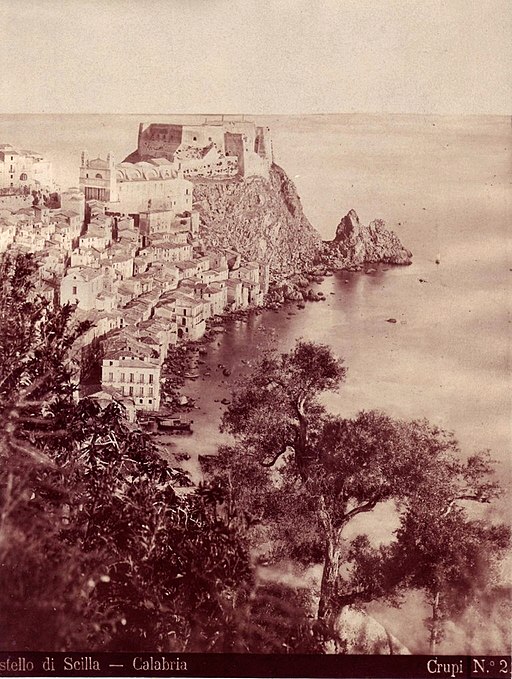
Scilla Calabria – image courtesy of Wikimedia Commons

It seems every time I put one of my characters in a ship, I have a nightmare with the research. In my manuscript entitled I Remember the White I couldn’t even find a suitable ocean liner for my character Miss Summerville to travel to Macedonia in during the last part of WWI. See my blog post from ten years ago here.

Now I’m nearing the end of my character Saran Linden’s voyage on the SS Ormonde in 1924. It’s been challenging to research as well. For the most part what is tricky is trying to find the coastlines and their appearance nearly 100 years ago. Youtube has quite a few videos travelling down the Suez Canal and cruising through the Straits of Messina but that is in this century and obviously the coastline has changed since the 1920s. 

Instead I have been looking at diaries of the period and have found a brief but useful one written by an Australian rower on the Ormonde in 1924. He’s on his way to compete in the 1924 Paris Olympics. I’ve also found quite a lot of photos of the Suez Canal so have been able to complete the scenes detailing what Sarah sees from the Ormonde when she is on deck. However there are not as many photos of the Straits of Messina so currently I’m struggling. Wish me luck in finding more as Sarah can’t wait for the ship to pass through the straits between Sicily and Calabria, Italy.

Work in progress

It seems that now we are virtually imprisoned there is a greater need to connect. I’ve found that when I exercise my dog more people say hello and now that I have to write from home rather than at a cafe, suddenly the need to share what I’m working on is palpable, although I rarely used to talk about my projects. Here is a snippet from a chapter entitled Shopping. It is from my book with the working Title Towards Paris. I hope you enjoy this glimpse. Like all of us at the moment, she is imprisoned. In Sarah’s case by the threat of violence.

Shopping

Melbourne was wonderful, the Block as they call it, much nicer than I expected. Funny how in Sydney we think everything in Melbourne will be inferior to what we have. The Block arcade of shops I could have spent all day in and Mother would have disappeared for days. But Clarissa had obviously set herself a vast list of places to visit and Pene and I could only follow in her wake. I felt like a child glancing at the marvellous domed ceiling, the tiles below my feet with my character Anne whispering in my ear that it would be a lovely place to play hide and seek in.

Yes, wouldn’t it be marvellous to lose myself here. Simply not go back to the ship. Find a cheap hotel and stay for a while until Nana’s five pound note ran out. But what then? I have no idea how many shops we visited but number one on Clarissa’s list was Georges on Collins Street.

Clarissa was intent on buying a woollen, navy coat for London. She tried to offer to buy me one as well but I told her that my terrible mink would keep me warm. She also offered to buy me some warm underwear for France. You have no idea, how cold it can be, she exclaimed but I stood firm, explaining that I couldn’t be seen spending money as I was soon to tell Toby I didn’t have any. Although I felt such a longing to buy one single thing from the wealth of beautiful items on the shelves.

It was then, as the spoilt only child of a Sydney socialite prone to spending a lot of money on clothes and accessories that, stupidly, I felt the full force of how my life has changed. As I gazed at a sunset coloured evening dress, which would have been perfect with my auburn hair, I realised that Toby was actually a terrible straightjacket, squeezing the life out of me.

Now as I return to my cabin I can feel that band around my chest. I am actually short of breath as I open our cabin door. Toby is inside seething. That much is obvious at first glance.

“You actually had the nerve to go shopping, did you? Shopping!”

“I was invited.”

“You were invited. You were invited!”

He is moving closer, his red face shoved close to mine. His left hand begins to squeeze my arm tight when there is a knock at the door. I open it quickly before Toby can compose himself.

It is Clarissa, serene, composed and with a happy smile on her face. She bursts into the room without invitation, startling Toby. I struggle to hide my relief.

“Darling, I got you something. It’s just a trinket for being so patient whilst I dragged you and Pene through all those shops. Pene’s is silver but I thought gold would suit you better with your marvellous hair.” Clarissa raises her arm to give me a small paper bag with the large scrolled writing of Georges on it, the G an extravagant loop…..
My talk on the Scottish Women’s Hospitals

Scottish_Women's_Hospital_people_killed_in_WWI_01

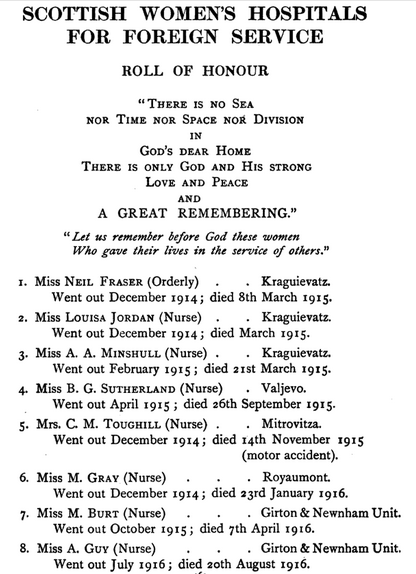
Scottish Women’s Hospitals Roll of Honour courtesy of Wikimedia commons

I am very proud and excited to announce that my talk on the Scottish Women’s Hospitals will be broadcast on Radio Adelaide 101.5 this coming Monday evening at 6pm on the segment On Service Voices.

Here is a link to the broadcast.

On Service Voices – Monday  02.12.19  from 6 to 7pm Adelaide Time (or listen again any time after 7pm)

DEBBIE ROBSON:  The SWH and the Aussie women who served in it.

This month 102 years ago, a British female doctor called Elsie Inglis died.  Elsie was almost 50 years old when World War One was declared. She offered her medical skills to the War Office, and was resoundingly rejected with the words, “My good lady, go home and sit still.”

Sitting still at home had never been one of Elsie’s strengths.  She contacted the Scottish Federation of Women’s Suffrage Societies with the intention of forming independent medical units staffed by women, in order to support Allied troops where they were needed most. She was able to establish the Scottish Women’s Hospitals for Foreign Service (the SWH), and they sent medical teams to Belgium, France, Serbia and Russia.  Many Australian women served in these units. They saved countless lives during WW1 and alleviated untold suffering. Today Debbie Robson brings us the story of the Scottish Women’s Hospitals, and some of the Australians who served in them.

Please tune in and I hope you enjoy hearing about these marvellous women.

My talk on the research of Tomaree

On March 10th I will be giving a talk at Toronto FAW on the research behind Tomaree. Now that it is nearly 10 years since the book came out, the long view helps me put a few things in perspective.
Firstly I am so grateful that I began researching the book when I did. Officially that was 2 January 2002. My friend Wayne Sampey had kindly put together a group of local residents for me to question. I was blown away because I had only been expecting one or two and here I was with a whole group of strangers. I believe the discussion was recorded and I remember it as a lively one.
Back in 2002 there was still quite a few residents that I could interview about their personal reminiscences that I believe really helped with the tone of my book. Also two US soldiers were still alive and corresponding with them was marvellous. In my talk I hope to illuminate how they did help make Tomaree a better book. And more importantly the real Peggy and Tom were alive and living in California when I began the book in earnest.
Time is not kind of course and most of the people that were adults during World War II are now gone. One of the things I value now more than ever is the letters I exchanged with the real Peggy until her death in 2010. She read the beginning of Tomaree when it finally came out and said she was too moved by the first encounter between Tom and Peggy, to continue reading. I hope that I captured something of that first conversation that eventually led to a young Australian women giving up all that she had known, including her family and country, for a new life in America.
I believe I am speaking for about forty minutes. Of course I have hours and hours of memories regarding my experience of researching the novel but I hope I can touch on the main points and help give others the tools to bring the past alive.

Researching v. Writing and/or maximising your writing time

Researching vs. WritingSometimes life gets the better of us – looking for or starting a new job, the birth of a grandchild, even a scene that you can’t find inspiration for and your writing stalls. This is when those pesky hashtags come into their own.

You may only now be adding them to your draft. Ideally it is best to add them from the very first draft but better late than never, as the old cliche goes. See my earlier post. Either way you should now have a general idea of things you need to check. That’s when it’s handy to make lists and start borrowing books on those subjects when the writing isn’t flowing.

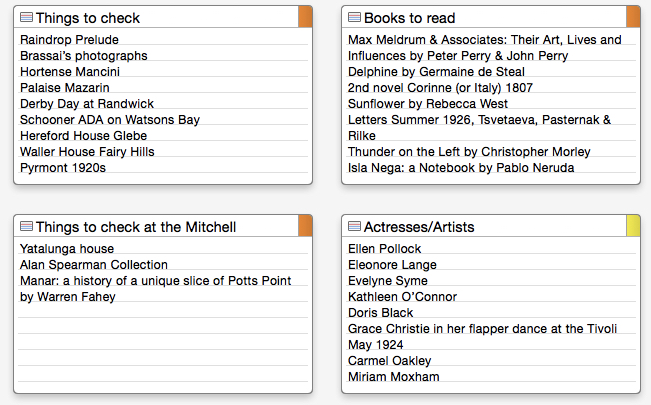
My local library know me as that strange woman who orders the oddest books on inter-library loans. Here’s four of my lists above. A lot of the books on the TO READ list will be interesting to skim through but they may not get rid of a single hashtag. They may, though, supply me with an idea or a possible scene.

I recently leafed through a marvellous book on Art Nouveau by Judith Miller. In it I found a marquetry side table, a silk panel and a glass carafe with a bird on the lid. I also found an amazing lamp with a bird pattern on it, a sea green glass vase, a brooch featuring a two swans interlocked and a bronze nude seemingly wading through rushes.

In the book there were details of each item, the country of origin, the artist and the year. These details, of course, DON’T go into the manuscript. But they are a guide for me as to whether they are suitable or not. What goes in is what my character Sarah sees at Lilith’s flat or what the family might call treasured objects such as the lamp or the brooch. i.e the swan brooch and the bird lamp. Sarah might recognise some things of course – that a side table is marquetry but she is not a specialist on furniture and art of the art nouveau period, although this is the period her mother might have been doing a lot of buying for the family home.

Armed with this new information on furniture and objects, I dealt a death blow to three hashtags in Lilith’s apartment. One of the objects was a lamp. I then searched lamp in my manuscript and discovered another hashtag #acetylene lamp. After some quick hunting I decided what I really wanted was a kerosene lantern. Bingo, another # bites the dust. I then worked on a hashtag relating to an outdoor lamp. I googled a few pictures and chose a square lamp for a porch light and then on the spur of the moment got rid of #easy chair and replaced it with a walnut armchair. Six hashtags gone! That leaves 222 to go. Now back to that fancy dress ball.

Getting the facts right and/or those pesky hashtags

Hashtag_example

Image courtesy of Wikimedia Commons

Everyone is different of course and I’d love to hear how other writers do it. Mark their manuscripts where more facts need to be added or checked, I’m talking about. After the first draft of Tomaree I had over three hundred points to check. I can’t remember how I highlighted them. It might have been the first manuscript I began using hashtags but I know I had a long list that I wrote out and worked my way through over the next few drafts.

During the writing of Crossing Paths I had a lot of research assistants in the form of international bookcrossers. #site of traffic buildup in France after the tunnel from England? #popular make of car driven in Canada by an upwardly mobile young female executive? #the layout of Green Gables farm? One of my dear friends and bookcrosser Bill Staubi answered that one (and some other tricky ones) through emails and the forum at www.bookcrossing.com

Whilst writing one of the many later drafts of Tomaree I had a luncheon with some of the elderly female residents of Nelson Bay to check one or two pesky points. By this time we were firm friends and the conversation went something like this:

“So, one final thing. I’m just checking about letter boxes.” (The letters of my two young lovers were being passed in a letter box of Peggy’s neighbour, Sarah Linden, the main character in my current manuscript).

“Oh, darling, we didn’t have letter boxes in 1943.”

“What?” (Insert shocked expression on yours truly.) “What did you do about the mail?”

“We just picked it up from the post office, dear,” says another of my elderly ladies.

“So when did you all get letterboxes?”

(Insert animated conversation around the table. The consensus was 1946/1947 but definitely after the war.) I then had to rethink and rewrite how the letters would be passed/left between Peggy and Tom, her American GI boyfriend. I decided on a blue pot (from memory) that Sarah had around the side of her house.

With my last manuscript I Remember the White, a lot of my chasing the facts/hashtags has been chronicled in this blog and I seem to have been in tight control of all those pesky, time consuming points that needed to be checked. The main one that proved very frustrating and almost elusive, as Robert Watson will remember, was how to transport my heroine from Sydney to Salonika in late 1917. Submarines were making things very difficult so road and rail was involved.

With my current manuscript Paris Next Week in its first draft, I’m afraid I’ve been a bit blaze and as a consequence disarmed. This is a seemingly light novel told in the first person about two very wealthy girls, Sarah Montague and Louie Gilbraith who live in the exclusive suburbs of Elizabeth Bay and Darling Point in the 1920s. Lots of parties, beautiful clothes, stunning houses and the party to end all parties. Just the other day, getting near the final chapter or two of the novel, I thought I’d check the state of the hashtags. OMG! 214 and its only a 50,000 word manuscript! They must have snuck up on me. Just checked today. 228! They have been breeding. Well those pesky hashtags will have to wait until further drafts but more in my next blog.

Fiction writers as researchers and historians

Site of SWH camp from NW_-1

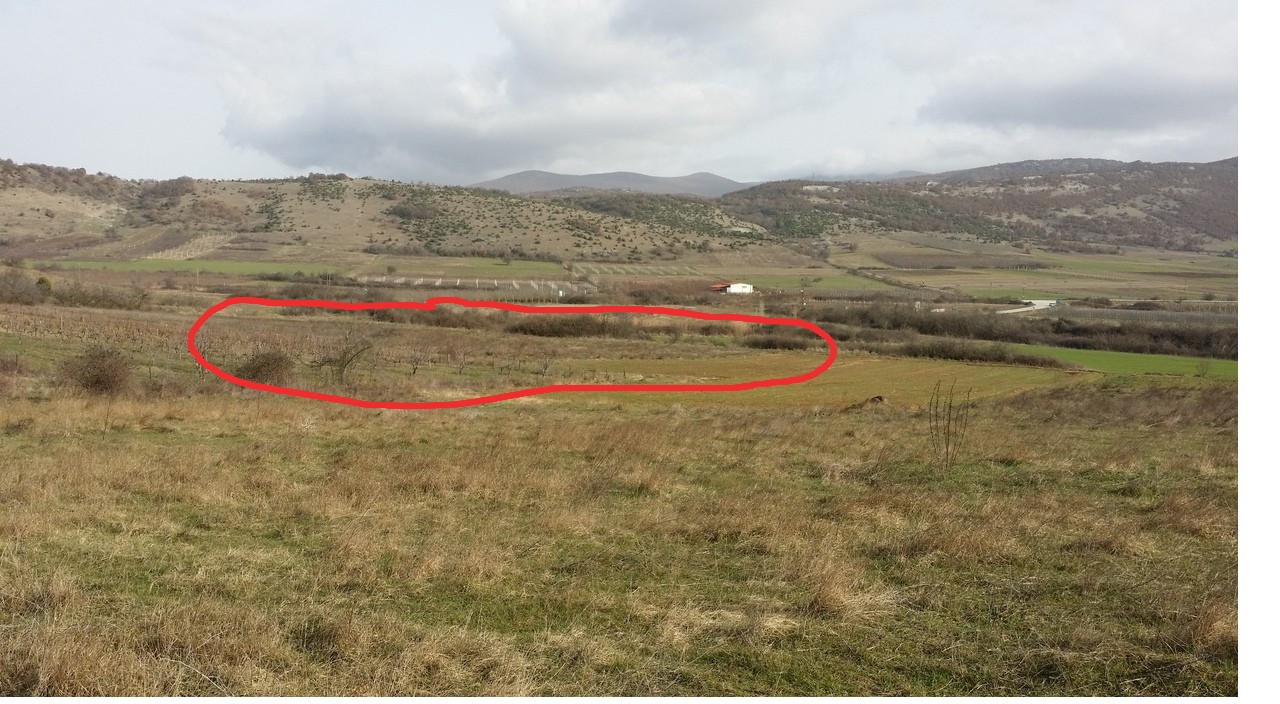
Site of SWH camp from NW – Photo courtesy of Nikiforos Sivenas

Yep! That’s what often happens to us historical fiction writers. We frequently become, by necessity, researchers and historians. Because I chose to write a novel set partly in Northern Greece and Serbia during the last 18 months of WWI, I am now fairly knowledgeable about the Scottish Women’s Hospitals, particularly the unit at Ostrovo.

Recently I started a page here on this blog to track the Australian women who worked with the Scottish Women’s Hospitals. With the help of other researchers and historians I have now updated the list.

The bulk of the list is made up of biographies from the tireless Alan Cumming at the Scottish Women’s Hospitals website. A number are also from Jennifer Baker’s Looking for the Evidence website.

I now have some more searching to do. A new friend Nikiforos Sivenas, whose very elderly father still remembers the women of the Scottish Women’s Hospital field unit at Ostrovo, has kindly supplied photos and a list of all the women who worked at the Ostrovo Unit. It will take me some time but I hope to search all the names to find out whether they are Australian or not. I also plan to read Australian Doctors on the Western Front by Robert Likeman and The Women of Royaumont by Eileen Crofton to locate more. I just need a few more hours in my day!