The Next Big Thing – The Grey Silk Purse

The Grey Silk Purse Notebooks

Here are four of my six notebooks for my current work in progress.

1) What is the working title of your current/next book?
My current work in progress is entitled The Grey Silk Purse and is set in 1917/1918 Serbia and Mayfield, Newcastle in 1920/1930.

2) Where did the idea come from?
Several years ago whilst doing book talks for Tomaree, a bookseller showed me a card advertising a New Year’s Eve party at the Trades Hall, Newcastle for 1930 run by The New Moon Dance Club. Whilst searching for more info about the mysterious club I came across a November, 1922 ad: “Lost yesterday Lady’s handbag between Elizabeth & Henry Streets, Tighes Hill along Port Waratah tramline or left in 6.42pm Port Waratah tram from Newcastle, contains 6 pounds, metal season railway ticket, keys etc. Finder handsomely rewarded on return to Miss Summerville, Room 5, Carrrington Chambers, Watt Street.”
I kept the name Miss Summerville but couldn’t find Carrington Chambers. Somehow I made the jump from there to my current project.

3) What genre does your book fall under?
Historical fiction

4) What actors would you choose to play the part of your characters in a movie rendition?
Strangely I have no idea for this one. I cast Crossing Paths though. The main characters were played (in my head) by Rose Byrne, John Cusack, Rupert Penryn-Jones, Miriam Margoyles and Helen Mirren (in an uncharacteristically timid role).

5) What is the one-sentence synopsis of your book?
It is January 1920 and Miss Summerville living in a beautiful house in Mayfield, Newcastle begins a diary detailing how, after a long illness, she has woken up and can’t remember the last two years of her life.

6) Will your book be self-published or represented by an agency?
I hope to finish the manuscript very soon. (I’m on the second last draft now.) I’m determined to find an agent and a mainstream publisher and that is my goal for 2013.

7) How long did it take you to write the first draft?
Much longer than Tomaree. Approximately two and a half years.

8) What other books would you compare this story to within your genre?
The Winter of the World by Carol Ann Lee
The Soldier’s Song by Alan Monaghan
Armistice by Nick Stafford

9) Who or what inspired you to write this book?
Heroic Australian women from both world wars, including Olive Kelso King, Alice Kitchen, Vivien Bullwinkel and Nancy Wake.

10) What else about the book might pique the reader’s interest?
Hopefully the wonderful Scottish Women’s Hospitals who ran 14 field hospitals during WWI. Many of their doctors, nurses and orderlies were Australian, including Stella Miles Franklin who worked at the Ostrovo Unit in Serbia, the unit featured in The Grey Silk Purse.
I’m now tagging three people to keep this meme going. They are:
Matthew Glenn Ward @ Matthew Glenn Ward
Anthony Wood @ Want For Words
Janna G. Noelle @ The Rules of Engagement
Happy writing!

2012: My reading year or fiction vs. poetry vs. non-fiction vs. memoir

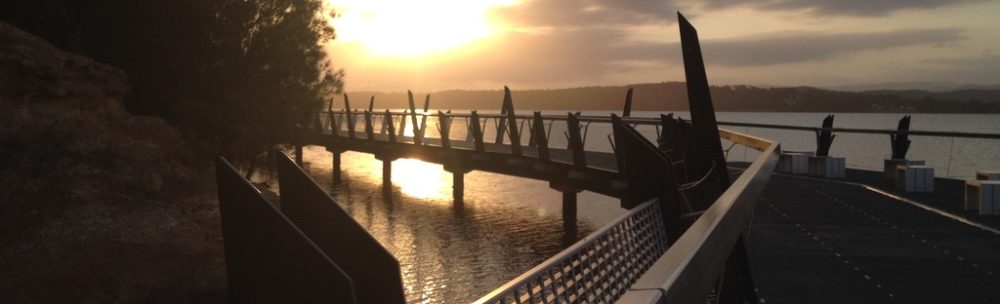
LargeWBatduskThe last week of the year or in my case, the last day of the year is often a time of looking back and saying what was the best book, the best photograph, the best film etc . My favourite photograph of 2012? Easy peasy. A quick scroll down my camera roll on my iphone and there we go – the image above, Warners Bay, Lake Macquarie at dusk. Last year’s was trees again – my current gravatar. My son took my favourite photo of my grandchild. My favourite film was the French film The Intouchables. My favourite book – well that’s an entirely different matter and one that I can’t make a quick response to.

Firstly though I thought I’d start by doing an update on my blog from October. It’s the one with a picture of 14 books on it.  The blog was entitled “What I’m Currently Reading”. I have since dispensed with most of the books, some summarily in the manner of a reader in a top publishing house with an enormous submissions pile –Singleton’s Mill being one of those. The White Peacock by D.H. Lawrence didn’t suit my purposes but from Sons and Lovers I was able to glean a line or two of discussion for one of my character’s – Clary, a young doctor and also enough details for my main character Phyllis to decide not to read it:

“Today Clary came to the main lounge where I was having afternoon tea armed with two books. He offered me Sons & Lovers. I opened the first page & came to the opening lines about Hell Row, colliers & gin pits, whatever they were. The book was dreary & long-winded by the looks of it.”

She choses the Buchan instead. I’m with her on that as I also decided not to read the Lawrence.  But here’s my review of The Thirty Nine Steps . Around the same time I officially abandoned Fifty Shades of Grey.

For insight into nurses’ lives during WWI and general conditions of Australian servicewomen caught in the frontlines, I would highly recommend Nightingales in the Mud by Marianne Barker. Although I only read the section on the Aussie girls in Serbia it seemed to me excellently researched and well written.

The River Baptists I thoroughly enjoyed and now have another Belinda Castles on my shelf to read . I also enjoyed Early One Morning, Robert Ryan’s very painstakingly researched book on two famous operatives of WWII. I really admired Jan Bennett’s book The Facing Island when I finally let myself settle between the pages and get used to the fact  that I was reading the words of a dying woman. However, I decided not to read the very much alive Ivana Lowell’s Why Not Say What Happened? memoir. Why? Now that’s a good question!

It seems I really don’t enjoy memoirs unless they are by a woman who has served in Serbia during WWI or an  elderly man from 200 years ago (Jean-Jacques Rousseau) and then they do get read! Why Not Say What Happened wasn’t set in Serbia so was dispensed as quickly as Singleton’s Mill – just not interested, although I thought I might be when I borrowed it. Reveries of the Solitary Walker on the other hand was a gem!

Moving through the pile, the Florence Scovel Shinn and the Dessaix essays are still on my bookshelf to read but during the last two blogs some other books have snuck in and demanded my attention and I’m very pleased they did; a book of poetry in particular beating a few of the fiction titles to the post. Peter Bakowski’s Beneath Our Armour is a wonderful example of simple, clear and precise poetry where every single word counts and after reading the collection I decided I definitely need to read more poetry to feed my fiction writing, if that makes sense.

The other four books that skipped the queue are:
Pandora’s Bottle by Joanne Sydney Lessner which I read on my iphone.
The Music of Chance by Paul Auster, a 1001 book that had to be read quickly for a BookCrossing virtual book bag.
The Ancient Shore: Dispatches from Naples by Shirley Hazzard – an excellent book bought from Maclean’s bookshop at Hamilton.
And an Erotica anthology by Skive Magazine, lighthearted and a lot of fun unlike that other book!

So it seems I need to read more poetry, memoirs of Serbia beat other memoirs simply by subject matter. The non-fiction I choose to read depends pretty much entirely on the setting and time frame of my WIP and lastly fiction wins hands down! No suprises there, really. And my favourite book and most respected read of 2012?

Nikki Gemmell’s With My Body. Beautiful writing on a powerful theme! Highly recommended.

My twitter community and why they are so important to me.

I went to the #NewyTwistmas party at Honeysuckle Thursday night attended by 60 plus and had a wonderful time meeting fellow peeps, most for the first time. I chatted to so many interesting people, including @CCLETS a dedicated potter, @whereismymuse a poet and @kimcoo and her husband who are relationship counsellors. It is a community that know me as a writer. That’s who I am – @lakelady2282, BookCrosser, author, amateur photographer. I tweet photos and the progress of my WWI novel The Grey Silk Purse. I also tweet/retweet about books, writing and history. That’s me!

To my friends and family, I am something else. With my family I’m mum and grandma. With my girlfriends I’m just a single woman in my fifties complaining about the lack of interesting men. (I have this theory that 75% of the single male population in their forties and fifties have been beamed to another planet and nobody’s noticed. But that’s another story.) My friends know I write but I don’t think they are aware of how much my writing means to me and in that sense they don’t know me.

My twitter people do. My wonderful Crossing Paths publisher @SkiveMagazine knows how important writing is to me and I love tweeting about his mag. The latest edition is an erotica collection so peeps get out there and buy it. Also @drdrdr09 knows. He became aware of how much I was agonising over finding an historically accurate way to get my main character from Le Havre to Salonika, late 1917 (avoiding submarines and nasty Germans). I tweeted in frustration to my twitter community and he stepped into the breach (WWI speak) and we had a fun time tweeting back and forth.

In my “normal” life, I mentioned to my friends the other day that I was having trouble with my epilogue. There was dead silence and then a change of conversation. In all fairness what can most non-writers say to such a statement? Some people would suggest a writing group. After all you get to sit down with “real” people and discuss writing problems but I’ve tried a few groups and they weren’t for me. (I once joined a screenplay writing group and one of the participants said, “I hate writing dialogue. Do you think that will be a problem for me?” She was serious). I didn’t go back.

For me twitter is my writing group, my photography group, my friends group, my “did you hear they found the cave from Island of the Blue Dolphins?” group. It is my arts world in a way that Facebook (that funny other social media with all the thumbs up things) has never been. It is where I’m lakelady2282 and it’s where on Friday morning I tweeted I had lost my job. I didn’t message my friends. I still – as of writing this article – haven’t posted it to Facebook. Without thinking I just tweeted. It was the community that I wanted to tell.

Arthur Streeton and the Battle of Amiens

I love hunting facts down, following paper trails and discovering interesting pieces of information. I mentioned in a previous blog that beginning my second draft of The Grey Silk Purse I had 98 points of research to check – things such as the location of the Niagara Cafe in Newcastle –
http://www.facebook.com/groups/LostNewcastle/permalink/506264069398435/
the weather in London on a December day in 1917, locations in Greece and various birds in the Hunter around 1920 to name some points.

Well I’m down to 10. Yay! and have been working on a very important research point – where my main male character Adrian Langley loses his leg. Before I could choose a location, I needed to choose a battalion for Adrian. I decided that although he is originally from Sydney, he actually joins up with his Mayfield cousins and in early 1917 becomes part of the 35th Battalion “Newcastle’s Own Regiment”.
http://en.wikipedia.org/wiki/35th_Battalion_(Australia)

Immediately the battle of Lena Wood (see picture in link above) caught my eye and with the mention of woods I decided to research the landscape of the Battle of Amiens, August 1918 and quickly found Arthur Streeton’s wonderful painting above. The sight of the painting really changed my thinking and brought with it more questions. Why was the landscape so beautiful and not ravaged? Did Streeton purposely paint an unaffected area of the battle or was this his idealised vision of the pre battle scene? The woods look wonderful, the scenery is green. The whole thing evokes a pleasant summer stroll and that thought led me to recreating AND transforming Adrian’s loss of his leg in a dream. Here is what I wrote inspired by the painting above:

“…Sometimes too the beautiful woods near Amiens loom large in his dreams. Often he is alone, strolling not fighting. August 1918. A summer’s day in northern France. A feeling of peace, contentment and then a sniper parts the green that conceals him and sends an arc of bullets that tears the ground up in front of him, rips Adrian’s right leg apart and slams into his hip and shoulder. It would be better to dream of the way it was but his mind has condensed and transformed the incident until it is almost completely unrecognisable. At least he’s not surrounded by men dying beside him and he is thankful for that. They inhabit the other dreams. Not this one.”

By researching the landscape of Amiens I had found the place where my character loses his leg but it also gave me the opportunity (because of the beauty of the place) to set it against the muddy, soul destroying landscape of a previous battle. Adrian’s most terrible nightmares are from the Battle of Passchendaele where his battalion was bogged down in the mud and only 90 from 508 remained at the end but it is not where he receives wounds (at least not physically) that almost kill him and cripple him for life. Hopefully my future readers will appreciate the irony.

What I’m currently reading and/or am about to read or are on my bedside table.

Yes, I know it’s ridiculous but what can I say? And you haven’t seen my TBR (to be read) pile yet. I’m a bookcrosser – lakelady2282 at www.bookcrossing.com and things can get out of control. Goodreads – www.goodreads.com doesn’t help either. According to goodreads I am currently reading 8 books. Seven of those are pictured above and the eighth is Dracula which I began reading about two years ago whilst at work (at a job where there was nothing to do).

Wikisource http://en.wikipedia.org/wiki/Wikisource is wonderful for this. You open up the book on your computer screen, say The Scarlett Letter or Sense and Sensibility (making sure the chapter heading is not showing and it looks like you are reading some sort of detailed manual). Perfect! It’s how I read both the last two books.

As to the pile pictured above – well let’s see. I started The Facing Island by the historian  Jan Bassett ages ago. It is about WWI so it should be a priority to read but somehow I still haven’t got around to it. I know I will though.There’s With My Body by Nikki Gemmell which I keep interrupting to read other books, mainly because it’s too heavy to take to work (to read in my lunch break). And then as you will have spied by the familiar cover there is Fifty Shades of Grey by E L James which I have pretty much abandoned like a hell of a lot of other readers…evidently. I keep thinking I might get around to reading at least to the heavy BDSM section but always end up reading something else.

Also on the goodreads list is Early One Morning by Robert Ryan. The book is about SOE (Special Operations Executive) agents in WW2, a subject I’m really interested in and I should finish this book soon. Reveries of the Solitary Walker by Jean-Jacques Rousseau I began (before I finished any of the other seven) so I could send it out on the VBB (Virtual Book Bag) 1001 (1001 Books You Should Read Before You Die) being run by a lovely bookcrosser. There’s And So Forth an excellent collection of essays by the erudite Robert Dessaix (but I don’t always feel like reading essays so it’s still not finished). And lastly The Collected Wisdom of Florence Scovel Shinn which I dip into every now and then.

Now we come to the remainder of the books pictured. These are the ones I lugged home from Speers Point Library yesterday.I still need to research Australian nurses during the First World War so I borrowed Nightingales in the Mud by Marianne Barker. I am also currently trying to find a few books that my character Phyllis Summerville is reading and sharing with other passengers on board ship to England in September 1917. The 1001 book is useful for this. D H Lawrence is also very useful as I wanted a few risque books. The Rainbow seemed perfect until I found out it was banned for eleven years. I chose Sons and Lovers and his first novel The White Peacock (the small orange book, top of the right pile). I won’t use the latter. I’ll probably settle on Sons and Lovers for its shock value but I need to check this so will scan through the book. That’s three down of the second lot. I borrowed The Thirty-Nine Steps by John Buchan because that’s the book Phyllis actually chooses to read instead of the Lawrence (so now I need to re-read it). When I chose the Buchan book from the stacks out the back I discovered Singleton’s Mill next to it by an Australian author Sinclair Buchan. (It’s the book on the top of the left pile.) I just might have to read this book too.

The River Baptists I especially ordered from the library after hearing Belinda Castles speak at This Is Not Art last weekend in Newcastle. I googled her name and found out that this book is set in the Hawkesbury River, a place I know and love from my teenage years when my parents owned a Halvorsen cruiser. I am really looking forward to reading this book. It is high on my list to be finished first but its tied with the other book that was on display at the library entitled Why Not Say What Happened? a memoir by Ivana Lowell. Who can resist “a heartbreaking account of a gifted woman, her brilliant but destructive parents, and a glamourous, aristocratic life that was laced with arsenic”?

Certainly not me! So there is the complete list of the books pictured above which pretty much exemplifies my life at present – researching WWI whilst being distracted by sex (as such), the glamourous life (the grass is greener) and generally taking too much on!! What more can I say, except reviews to follow… I hope.

Doing a TV interview

It was fantastic. I’m not quite sure how Channel Ten Sydney came to approach the Adelaide BC group but bookcrosser Newk put up the information at BCAUS, the yahoo BookCrossing group, that the station was looking for bookcrossers. Yours truly, never backward in coming forward, put up her hand and also contacted the station.

Eve Neylon the segment producer was wonderful and the online intro the station put together to explain BookCrossing to the general public was one of the best examples I’ve seen. BookCrossing really is a parallel universe. It is a tricky thing to explain in a few minutes but the bottom line is that www.bookcrossing.com is about sharing books. If you love books and want to share books with others, read reviews of your favourite books, meetup with people to discuss books and even receive books in the mail from faraway places then BookCrossing is definitely for you.

For me discovering the site has literally changed my life. I have not only been to 4 conventions: Adelaide, SA in 2006, London in 2008, Greece in 2008 and the Sydney Unconvention in 2010 but it has also inspired me to write my second published novel Crossing Paths: the BookCrossing Novel.

One of the questions my interviewer Paul Henry was going to ask me was how did I get into BookCrossing. Well, a week before Christmas in 2003 I saw an ad in an Australian Publications mag about the site and immediately I was intrigued. I couldn’t wait to get home and sus it all out!

After an hour or two going over the site (it is a very comprehensive with a lot to take in) I immediately realised “This is so me.” I love books and I love synchronicity and BookCrossing is about both. After a little while I also realised that BookCrossing was also a book – a book that I could write. I remember working out that amazingly people can be tracked through BookCrossing. And you could also anticipate where people might be travelling to next, by the books on their “virtual” bookshelf.

I also remember, within a day of discovering BookCrossing, studying my “real” bookshelf to try and work out what books my character would take with her and how many. I initially decided on 10 but then lowered it to eight to allow for books she might pick up on the way. Also important was where she was going to release the books and so began my journey of writing a book inspired by an online bookclub, the doorstopper that I managed to hold up in my TV interview, as you can see for yourself. http://www.youtube.com/watch?v=3PAqoC94Sis

Doing the interview was a wonderful insight into how segments are produced. Eve was very thorough. First interviewing me by phone, keeping in touch by email, phoning me again to confirm the appointment, asking more questions and a day or so before emailing me with background information that the interviewer would be reading to prepare themselves (Paul Henry as it turned out) for the segment and questions they would be asking to give me a chance to put together my best answers.

We only had three minutes and because the station decided on producing a small online intro to BookCrossing, that freed Paul up to ask different questions. He asked one or two on the list but the rest were dictated by his curiousity and the way the conversation went. Although he did interrupt a bit I’m glad he did because that’s how we managed to cover quite a lot in in such a short timespan.

I’m so grateful to have had the opportunity to do the interview. It was such an enjoyable experience. I was lucky to have my friend Gina drive down with me from Newcastle and she was allowed to sit offscreen and watch the segment. Everyone was so friendly – the makeup girls, Lana, Eve, Paul and Kath. Thank you Channel 10! It was fun!

How Many Drafts of Your Novel Should You Do?

My answer is six and that is probably my average. If the book proves problematic then I’ve reached eight but that’s generally my maximum. I’ve heard other writers speak of astronomical numbers such as 18, 27, 34 and even fifty odd.  I immediately think how do they do that many drafts? But me being a suspicious person, when I hear such amazing figures I often wonder what they consider constitutes a draft. Say, maybe a quick adjustment of a few words here and there, a scan and then start again? Is that what they call a draft? Put the thing away for a week or so, pick it up again, flick through, change another paragraph and that’s draft 25 for you? I don’t know of course. I can only tell you what my methods are so here goes…

Draft 1 is obvious of course. That’s where you get the main storyline down including what scenes to put in, what to leave out and from whose point of view. Last Tuesday I completed the first draft of my work in progress The Grey Silk Purse. Strictly speaking it is not a complete first draft. It is missing one final chapter and the epilogue which is a letter. Both I can’t do at this point until I’ve done heaps more research.

And this is where the 2nd draft comes. I will now go back, look up and check 95 # points of research such as the uniform of staff working in a stationery shop in Newcastle in 1920. In my novel Tomaree. In Crossing Paths I actually don’t remember that I had as as many things to check. I managed to do most of my fact-checking as I went along.

Before I generally start writing a novel I have already done a fair amount of research. Whilst writing the first draft I’ll check as many points as I can but when fact checking starts to really slow me down that’s when I put a # in and move on.  With the second round of research I will often have to change the narrative slightly to accommodate facts I have recently discovered. I will also tidy up my prose and check overall length of chapters. Is that scene really necessary kind of thing. With The Grey Silk Purse I have a massive construction problem two thirds of the way through. I will tackle that and will also have to keep a good eye on it in the next draft.

In the 3rd draft I will usually start drilling down, checking my word usage (okay for that particular character or time etc) my paragraphs (are they too long?) I also check how the writing flows. This is a good time to actually really look at any scenes or chapters that still trouble you. Can I do without it altogether or do I need to rewrite? Any extensive rewrites at this stage will have to be checked closely because they will not have been read anywhere near the amount of times of the rest of the work. This is where I often check odd things like the colours of the diaries in The Grey Silk  Purse. There are four different diaries that feature in the manuscript and they are all different colours.  I will probably check the word count of each diary and that I’ve got the colour correct for each one (particularly as these are referenced later in the novel).

It is usually around the 4th draft that I like to print the whole manuscript out and work at it on paper,  pretending I’m a ruthless editor working through page after page, slowly but very carefully. It’s where you really get to see how the manuscript will look in hard copy.

It’s funny how many things you can pick up and fix in this different format.  You’ll find it is very handy when looking at dialogue. I also generally write my edits on the page and then do another draft putting them in to my word document. This will then be the 5th draft.

In this draft I will not only put in my changes but do a global search for a particular word that I think I might have used too much.  (This is why it is a good thing to keep your manuscript all in one document!) I’ve done this with all my novels and it is never the same words that keep cropping up. It is generally different words for different books. When you realise you’ve got 162 “wondered”s you can then push yourself to find alternatives. (In this 900 word essay I have 13 “check/ed/ing”s. Maybe too many but hey this us what this piece is about.)

The 6th draft (if all is going well) is the final read through. It’s a chance to read the manuscript for the umpteenth time.  (Because if you are like me you will often re-read it a lot of times before you even start the second draft).  You can check every word for typing errors and watch out for those slippery little suckers the closing quotation marks which (for me anyway) have a habit of disappearing at a great rate. Are there any missing? Can you find any more typos? Realistically you will not find them all so that’s where a friend can come in handy and do a read through for you. Another pair of eyes will always pick up things you’ve missed. That’s my experience anyway.

And now your baby is ready for an amazing journey. Kiss it goodbye and wish it luck.

The Bottom Line: Our characters are what they focus on.

It sounds simple of course but I really didn’t discover this until recently. To be more precise after I finished writing Crossing Paths: the BookCrossing Novel.  I decided (unwisely I now know) to use eight different points of view to tell the story. This was a challenge of course and one I think I met for the most part, except for one thing – two of my male characters were often confused with each other by my readers. I thought it was enough to differentiate them – one was gay, lived in Cornwall and was a new age writer; the other was in love with the main female character Jane, lived in Boston and was an antiquarian bookdealer. But ultimately they often appeared the same because their thoughts were both focused on Jane, worrying about her and trying to anticipate her next move. It also didn’t help that both men’s name started with J…

We learn of course by our mistakes and I am much more aware now, how important focus is. It doesn’t just dictate our character’s thoughts (and ours for that matter) but also how a character dresses, acts and treats others and ultimately dictates the course of the whole novel.

In Fifty Shades of Grey the main character’s focus is of course on the sexy but rather twisted Christian Grey. In the novel James labels her character Ana’s thoughts as sometimes “my inner goddess” or  “my subconcious”. These “other” voices occasionally clash with her general thoughts but for the most part Ana’s focus collectively remains on Grey’s delectable hips.

In Bernard Schlink’s The Weekend: A Novel it is hard to keep track of the characters at times but when we do move closer to them I noticed that Schlink had given them all different concerns; if they were focusing on the same thing ie their friend, a former terrorist released from prison after serving a long sentence – then they were depicted with varying viewpoints. Reading this novel was a real eye-opener for me in regards to differentiating characters.

I realise now too, how brilliant one of my long time favourite writers is at this. I remember in Rosamund Pilcher’s The Shellseekers, when we are introduced to Noel all he’s thinking about (I’m writing this from memory) is his clothes and the heating in his flat. And that’s all that is really important to this character because he’s totally self-absorbed.  Never mind that his mother is ill, material things are more important and this is all just in the first paragraph introducing him – a brilliant example of determining a character’s focus quickly. Pilcher can do this very artfully in her short stories in just a few lines and that’s why I love her!

I used to think that as long as you managed to get in a character’s physical description and emotional makeup, were careful how they spoke and dressed, then they would all appear different from each other. But of course that’s not necessarily true. I’ve learnt this lesson after years of hard work. It’s all so obvious now but the knowledge has come to me at a time when I actually can’t put it into practice! In my current novel I am unable to go into the mind of my character. We can only judge her by what she says and does. Her diaries tell us some things but the reader has to guess her focus.

As you can guess by this, I love to set myself challenges and I will report on my blog with what I’ve learnt from this exercise in the near future. In the meantime back to The Grey Silk Purse.

Collaborating on a Writing Project

It’s an interesting concept and until last month one I found quite mysterious. How did people collaborate – actually write something together, something fairly substantial like an historical document or a novel? Was there always one person who did the majority of the writing?
I have previously worked on a short play with someone but it was fairly painless. They provided the initial idea and I ran with it. A few suggestions  were made and that was it. It has needless to say never seen the light of day. But what about a much larger project? Collaborative fiction for instance? In that partnership, who did the thinking and who did the writing?

Australia has a number of famous writing teams. In 1944 James McAuley and Harold Stewart collaborating as Ern Malley wrote seventeen poems in one day as a hoax against Max Harris and his magazine Angry Penguins. From the late 1920s to the late 1940s Flora Eldershaw and Marjorie Barnard (see picture above) wrote under the name of M. Barnard Eldershaw. During that time they published an impressive body of work that included 5 novels. Evidently Barnard did more of the actual writing whilst Eldershaw concentrated on development and structure of the works. Louise E Rorabacher who wrote about the collaboration stated: “that in their early collaborative novels it is impossible to distinguish their separate contributions.” The partnership worked because according to Nettie Palmer, a leading literary critic of the time: “Any difference in the characters of the two women doesn’t make for a difference in their point of view or values.”

In any fictional collaboration it is surely necessary for both authors to understand the characters they are writing about, especially their weaknesses and their passions – in essence to fully comprehend the character’s point of view and for the collaborators to agree on this fictional point of view.

And just as importantly, also, is what each collaborator wants from the project. In some instances they would be working towards a common goal – publication. In the instance of Dymphna Cusack collaborating with Florence James on Come in Spinner, the completed book was submitted and won the 1948 Daily Telegraph novel competition. Cusack also collaborated with another writer – Miles Franklin on the 1939 novel Pioneers on Parade.

In other instances one person might be commissioning another to do the writing for them, something they are unable to do themselves but have the money to finance the project. In many of these collaborations one party will pay to have writing done but the “writer” will not be acknowledged. They will remain a ghost that has collaborated silently. In arrangements of this sort the needs of both parties have to be looked at very carefully – preferably a contract drawn up with the collaboration clearly outlined. Very cut and dried of course but necessary.

Just as in good fiction a character’s point of view must be fully understood and imaginatively rendered, I have found through a painful experience last month that each collaborator’s point of view and needs must be understood. In my recent experience it happened that the other party didn’t realise that I needed to be paid on time. They also didn’t feel it necessary for communication to be both ways. With all this miscommunication and misunderstanding on such a basic level occurring – there was no hope in hell that we could collaborate on a unified point of view for our character and for the project overall. It was never going to fly.

It is now my belief that collaboration is like many forms of relationship, each person’s point of view must be understood and above all respected. Without this basic tenet, forget collaborations and relationships of any kind. They will never get off the ground!

To Marjorie Barnard and Flora Eldershaw…my sincerest admiration!

Reading John Berger at Brisbane Airport or the importance of place in fiction

ImageYes, that’s what I was doing in April and I think the author would have approved of the strange juxtaposition. After all in his novel Here is Where We Meet: a story of Crossing Paths, John Berger did just that. He chose fascinating or unusual places, sometimes associated with the people he was writing about or sometimes not, to place those people in context. And it works. His mother has never been to Lisbon yet her ghost is wandering around the city as if she was born there. And because of this juxtaposition his mother seems more real than perhaps she otherwise would have been, placed in her historical and geographical location of 1930s East London.

Place is obviously very important to Berger and he actually has his namesake John say:

“So time doesn’t count and place does?”

For me reading that line was a charged moment. Place is what I hang all my novels on. I simply cannot write without a landscape to put my people in. I generally write about the first half of the last century and if I manage to chose a landscape that no longer exists – then more the better!

I can still recall coming across a place called Burragorang Valley. Pictures from the 20s and 30s showed a rather beautiful place with guest houses, rolling countryside, creeks and valleys. It was obviously very popular and I wondered why the hell I hadn’t heard about it before. A little more research uncovered the fact that well…it had been flooded! Completely flooded to build Warragamba Dam, the new big water supply for Sydney. I was almost jumping up and down with excitement. This loss suited the novel completely and I think Berger would have approved.

In Here is Where We Meet, Berger places Audrey a young woman he once had an affair with – in not just London of the 1940s but a particular place within that world – Coram Fields. They see the trees of the place as they gaze out the window after making love. Luckily it is still a green area today.

Elsewhere in the novel there is the wonderful setting of Krakow. Against the landscape of the old Jewish quarter in this Polish city, Berger brings the character of Ken, another ghost, alive. I’m not sure if his youthful friend Ken ever went to that part of Europe but the location adds a strong dimension to his portrayal. As John the narrator says simply: “Ken was born in New Zealand and died there. I  sit on the bench opposite him.”

Airports by comparison are like a grey canvas that – for the most part – do not echo with associations. But we can add things to them. Like what we are reading at a cafe before flying home. We can add with deft strokes where we are going or where we came from.  Or at least try to be as successful as Berger is in depicting the atmosphere of a particular place.

Below are the links to the three books I bought back in March and wrote about in my blog of the 18th. All three are imbued with a powerful sense of place.

The Comfort of Strangers by Ian McEwan 
Waiting for Leah by Arnost Lustig
The Quartet by Francois Emmanuel