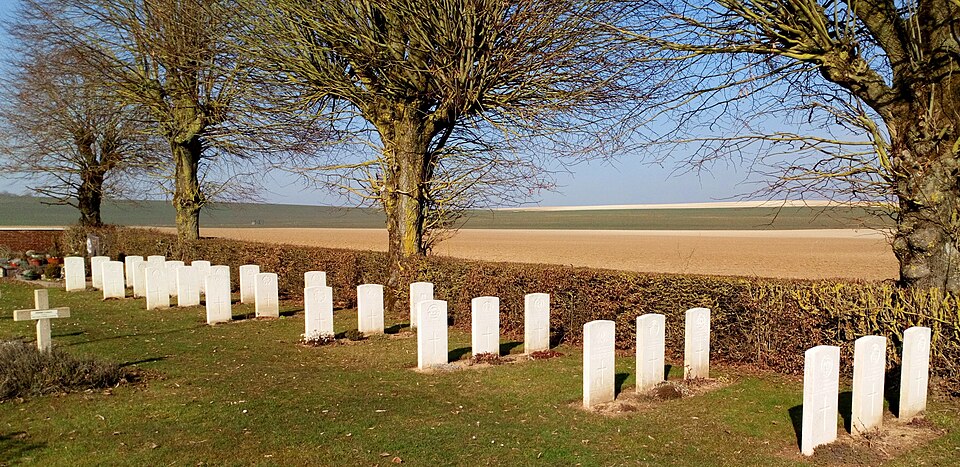
Dreading visiting the Grave

Image courtesy of Wikimedia Commons

For the first time in over thirty years of writing long prose I have actually taken a moment to make a note of the last few planned chapters of this manuscript I am now calling Towards Paris. It is the second manuscript featuring Sarah Montague in a possible planned series. She first appears in Tomaree as a secondary character in 1942, but for this second book set in the 1920s it is 1924 and she is the star. This book has the working title of Towards Paris.The first book has the working title of Paris Next Week.

Here are the planned last few chapter titles in Towards Paris. The first one I am three pages into:

Another Two Lists
The Grave
Derbyshire
The Voyage Home
Highcliffe

Instead of researching the Dernancourt Communal Cemetery, I am working out an itinerary for a short trip around a few Derbyshire towns. I am looking at photos of Bakewell and Ashbourne instead of trying to work out what would be written on her brother’s headstone, other than name and rank. I can’t seem to tackle the reality of visiting such a place, even in my imagination.

Just like Sarah, I’d rather be anywhere but at the cemetery, facing her grief and loss. For anyone, even a fictional character, it is tough to visit the battlefields and cemeteries of WWI and WW2. I don’t know how immediate families managed it.

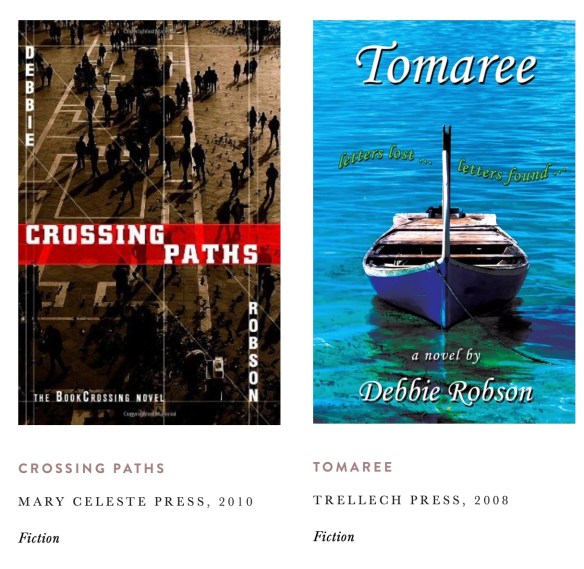
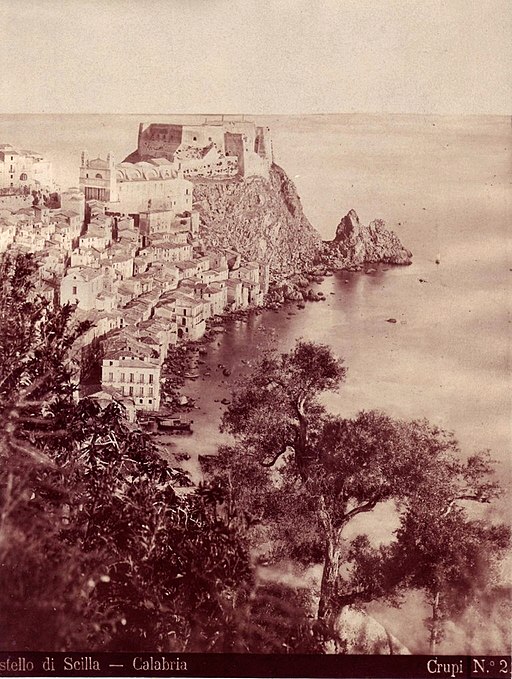
MY FOUR BOOKS!

Image courtesy of Blood Tree Literature

Anyone who is a writer and has their works published up on Amazon will know now hard it is to see all your books displayed at the one time. You can search for one book and it will come up. Oh, there it is! You go back and search for all your books, click on the link and one is always missing. At least that is what has happened to me and is still happening. A Glimpse is missing from my books and I know I will have to battle to get it added so that they are all displayed.

So you can imagine my surprise when Blood Tree Literature invited me, as a former contributor, to submit a piece for Issue 15. They accepted my cnf piece and I’m looking forward to receiving this lovely issue soon. After I received the news my piece had been accepted I investigated their contributors page, clicked on the link and discovered my four books (as I can’t display here on WordPress) staring back at me in date order from right to left in a very elegant design with a link for my website and instagram. A truly rewarding moment as a writer. Please check out this wonderful magazine.

The tricky task of killing off a character

Image courtesy of Wikimedia commons

Yes, that’s where I’m at. She has just got to go. Part of me is surprised but the other half sort of knew all along that my main character’s best friend would not survive the second book of a planned series Towards Paris.

After all, my main character Sarah Montague is a crossover character from my novel Tomaree where we meet her at age 38 living in Shoal Bay, Port Stephens, far away from the glamour of Paris or even Sydney.

At the moment though it’s 1924 and Sarah is about to turn twenty and she is trying to find a new life for herself in Paris. Earlier her best friend Louie eloped with a young Jewish man and the couple are living somewhere outside of Paris.

Now I have to sort out the how and the where. I’m thinking some sort of heart disease and maybe Sarah will find her best friend severely ill at a sanatorium in the alps. I am having fun playing with different scenarios. For the details you’ll have to read Towards Paris when it comes out!

Trouble with palm trees

Image courtesy of the State Library of New South Wales

So, I have spent a ridiculous amount of time today trying to find out when the palm trees in Bridge Street were removed. I’ve been through blogs, endless google searches, at least an hour at the City of Sydney Archives, eBay, Alamy you name it. It sounds trivial but I need to know the date so that I can place a flash I have written, chronologically, in my collection. For the moment their loss features in my just written flash but now I’m obsessed with the when.

I had heart failure earlier in the day when I found a postcard featuring the palms dated 1958, a date that completely rules out the flash from being included in my collection. But I’ve since found the photo below dated by the Sydney Archives as 1954 with no palm trees. So hopefully the trees were removed sometime in the early 1950s. It’s strange but there are not very many photos of the street in the 1940s. Because of the war perhaps?

You will see that the distinctive Burns Philp building features in both photos. I have also “asked a librarian” at the State Library the question so I will keep you posted on the outcome. In the meantime I’ll probably still be searching in my sleep.

Image courtesy of the City of Sydney Archives

Update: I heard from Kate, a librarian at the State Library, on the 22nd December and she confirmed through various newspaper articles that she found in Trove that the palm trees were chopped down in August, 1946. I’m not sure what I did wrong when searching Trove but I had no luck even though I tried “Any of these words” and “All of these words” for palm trees Bridge Street. Here is a small newspaper article:

Image courtesy of Daily Telegraph 26/8/46

And time marches on and over the intervening years so many more trees have been cut down in the name of progress.

Characters as travelling companions

Image courtesy of Wikimedia Commons

I have returned to my manuscript Towards Paris. The writing has been interrupted because of illness, injury and my mother’s worsening dementia so it has been a relief to finally catch up with my character Sarah Linden, nee Montague.

            She has arrived in London after a five and a half week voyage from Australia and is planning some sightseeing over the next few days. She is about to book into a boarding house on Montague Street and will be picking up her pass-book from the Orient Line office on Monday. In the meantime she will do some sightseeing just as I did fifty two years later. Unlike me, my character is gay and, as a lesbian in the 1920s, life can be a bit tricky but she has a lot of things to do other than meet a woman friend. She has a trip to France to plan and a visit to Chelsea to meet her best friend Louie’s uncle. Hopefully he will have a recent address for her. In Paris Next Week Louie married a Frenchman and they are living somewhere on the continent. Louie has not been the best of letter writers.

            Although I know I am dictating Sarah’s movements with my writing and research, it often doesn’t feel like that. It feels more like I am visiting her in the 1920s. I’m giving her odd bits of advice, putting the odd challenge in her way and I’m sure together we will enjoy London. I’ll be her confidante as she negotiates her new life in London and Paris. It’s all very exciting and like a beloved friend’s company, I find it soothes me to spend time with her. If that makes me odd, so be it, as Sarah would say. 

Navigating the Past

Scilla Calabria – image courtesy of Wikimedia Commons

It seems every time I put one of my characters in a ship, I have a nightmare with the research. In my manuscript entitled I Remember the White I couldn’t even find a suitable ocean liner for my character Miss Summerville to travel to Macedonia in during the last part of WWI. See my blog post from ten years ago here.

Now I’m nearing the end of my character Saran Linden’s voyage on the SS Ormonde in 1924. It’s been challenging to research as well. For the most part what is tricky is trying to find the coastlines and their appearance nearly 100 years ago. Youtube has quite a few videos travelling down the Suez Canal and cruising through the Straits of Messina but that is in this century and obviously the coastline has changed since the 1920s. 

Instead I have been looking at diaries of the period and have found a brief but useful one written by an Australian rower on the Ormonde in 1924. He’s on his way to compete in the 1924 Paris Olympics. I’ve also found quite a lot of photos of the Suez Canal so have been able to complete the scenes detailing what Sarah sees from the Ormonde when she is on deck. However there are not as many photos of the Straits of Messina so currently I’m struggling. Wish me luck in finding more as Sarah can’t wait for the ship to pass through the straits between Sicily and Calabria, Italy.

Other Writings

Image courtesy of Dodging the Rain

I have been very lucky lately to have quite a few prose pieces and poems and a talk published and I would like to thank those marvellous online and print literary journals that have featured my work including the latest, the marvellous Dodging the Rain.

You will find a list of my publications on my Other Writings page with thanks to Typishly,
Cabinet of Heed, The Mystic Blue Review, Radio Adelaide, Poached Hare, Storgy, Women of Words: 2016-2018 edited by Janette Hoppe, Not Very Quiet and of course Dodging the Rain. Hopefully will be adding more soon!

Work in progress

It seems that now we are virtually imprisoned there is a greater need to connect. I’ve found that when I exercise my dog more people say hello and now that I have to write from home rather than at a cafe, suddenly the need to share what I’m working on is palpable, although I rarely used to talk about my projects. Here is a snippet from a chapter entitled Shopping. It is from my book with the working Title Towards Paris. I hope you enjoy this glimpse. Like all of us at the moment, she is imprisoned. In Sarah’s case by the threat of violence.

Shopping

Melbourne was wonderful, the Block as they call it, much nicer than I expected. Funny how in Sydney we think everything in Melbourne will be inferior to what we have. The Block arcade of shops I could have spent all day in and Mother would have disappeared for days. But Clarissa had obviously set herself a vast list of places to visit and Pene and I could only follow in her wake. I felt like a child glancing at the marvellous domed ceiling, the tiles below my feet with my character Anne whispering in my ear that it would be a lovely place to play hide and seek in.

Yes, wouldn’t it be marvellous to lose myself here. Simply not go back to the ship. Find a cheap hotel and stay for a while until Nana’s five pound note ran out. But what then? I have no idea how many shops we visited but number one on Clarissa’s list was Georges on Collins Street.

Clarissa was intent on buying a woollen, navy coat for London. She tried to offer to buy me one as well but I told her that my terrible mink would keep me warm. She also offered to buy me some warm underwear for France. You have no idea, how cold it can be, she exclaimed but I stood firm, explaining that I couldn’t be seen spending money as I was soon to tell Toby I didn’t have any. Although I felt such a longing to buy one single thing from the wealth of beautiful items on the shelves.

It was then, as the spoilt only child of a Sydney socialite prone to spending a lot of money on clothes and accessories that, stupidly, I felt the full force of how my life has changed. As I gazed at a sunset coloured evening dress, which would have been perfect with my auburn hair, I realised that Toby was actually a terrible straightjacket, squeezing the life out of me.

Now as I return to my cabin I can feel that band around my chest. I am actually short of breath as I open our cabin door. Toby is inside seething. That much is obvious at first glance.

“You actually had the nerve to go shopping, did you? Shopping!”

“I was invited.”

“You were invited. You were invited!”

He is moving closer, his red face shoved close to mine. His left hand begins to squeeze my arm tight when there is a knock at the door. I open it quickly before Toby can compose himself.

It is Clarissa, serene, composed and with a happy smile on her face. She bursts into the room without invitation, startling Toby. I struggle to hide my relief.

“Darling, I got you something. It’s just a trinket for being so patient whilst I dragged you and Pene through all those shops. Pene’s is silver but I thought gold would suit you better with your marvellous hair.” Clarissa raises her arm to give me a small paper bag with the large scrolled writing of Georges on it, the G an extravagant loop…..

Always

Always

Are we defined by the things that haunt us? Perhaps haunt is a strong word. How about the things that won’t leave us alone? The things that keep popping back into our lives from time to time. For me it is two signs that I’ve been thinking about lately. The one pictured above I’m hoping will be the jumping off point for a new story.

The other one, another sign on a gate – Manderley – (obviously a fan of the book Rebecca) by the waters of the upper reaches of the Colo River, of all places. I was on a boat at the time cruising past and the gate literally opened out onto the water. I strained to see a house further up the path above the river but couldn’t. This was the 1970s and I’m suspecting that the house and the gate are long gone. From time to time over the years, I wonder idly about hiring a boat and finding the gate but the logistics of the whole endeavour keep putting me off. Still “Manderley” comes to me from time to time in both its manifestations.

Daphne du Maurier “discovered” Manderley in the late 1920s when the family began visiting Fowey in Cornwall. Sailing on her yacht Marie-Louise, Daphne had come across the enchanted woods on the Gribben Headland. “And looking north, inland, from the Gribben, I could just make out the grey roof of a house there, set in its own grounds amongst trees.”

On the first occasion Daphne and her sister Angela attempted to visit the house but the drive was three miles long and night fell before they reached the house. From Growing Pains: the shaping of a writer Daphne writes:

“The following day we tried another approach, taking M (Daphne’s mother’s) little car and driving to the west lodge, leaving the car at the gate. We walked across the park and through another gate, and came to the house. Grey, still, silent. The windows were shuttered fast, white and barred. Ivy covered the grey walls and threw tendrils round the windows. It was early still, and the house was sleeping. But later, when the sun was high, there would come no wreath of smoke from the chimneys. The shutters would not be thrown back, nor the doors unfastened. No voices would sound within those darkened rooms. Menabilly would sleep on, like the sleeping beauty of the of the fairy-tale, until someone should come to wake her.”

She visits the house many times by herself, walking the grounds, peering inside and imagining the past life of the house. Of course it is Daphne herself who wakes the house. Twice. In real life she leases the house and does it up, making it her home and living there from 1943 to 1969 when she returns it the Rashleighs. In the world of fiction she creates Manderley, the house of Maxim de Winter.

“Childhood visits to Milton Hall, Cambridgeshire influenced the descriptions of Manderley, especially the interior. Menabilly provided the setting, the long drive and the woods hiding the house from the road. The inscrutability of it, you could say.

Inscrutable too was my “Always” gate. What was its meaning? When I first saw the green gate, I had recently moved to the area after my “always” marriage broke up. In the early days when I passed the sign, I would look at it with a quizzical fascination. How hopeful of them. In darker moods, I would think, How dare they! Now I just wonder (as my character Zach will do) what do they actually mean by this nonsensical word?

And what about he persistent image of a ‘Victorian Woman’ who later developed into The French Lieutenant’s Woman – the character Sarah Woodruff in the novel by John Fowles. This image wouldn’t go away either.

In a 1969 essay titled “Notes on an Unfinished Novel,” Fowles reflects on his writing process. He said he had an image during the autumn of 1966 of “A woman [who] stands at the end of a deserted quay and stares out to sea.” He determined that she belonged to a ‘Victorian Age’ and had ‘mysterious’ and ‘vaguely romantic’ qualities. He made a note at the time about the function of the novel saying:

“You are not trying to write something one of the Victorian novelists forgot to write; but perhaps something one of them failed to write. And: Remember the etymology of the word. A novel is something new. It must have relevance to the writer’s now – so don’t ever pretend you live in 1867; or make sure the reader knows it’s a pretence.” And not long afterwards The French Lieutenant’s Woman, one of the most intriguing, postmodern historical fiction novels of the 20th century is born.

A sign, a house, a person. Whatever the object of fascination is, it seems to me that often, if we let it, obsession turns into a creation.
Setting realistic writing deadlines

Deadline_logoOr not! So, it seems that I have left myself two weeks to complete my second draft of Paris Next Week. I’m not panicking though. Generally I find that the second half of a manuscript is less of a mess than the first half. I’m hitting my stride and have usually by this stage of the work, sorted out my characters.

What I have to do in the next two weeks is to read the rest of the manuscript, approximately 110 pages and check continuity and readability .(I’m not doing a lot of word by word scanning – that will be done in a later draft). The main thing I want to do in this second draft is to get rid of the remaining 106 hashtags which highlight points of research that I must check.

For instance the last three hashtags were:

The date the Clifton Gardens Hotel was built. 1871.
The date the amphitheatre at Bradleys Head was built. Yes, I know! Easy for some of you – in 2000 for Mission Impossible II.
An English perfume not too earthy and not too flowery that was around before WWI. White Rose by Floris.

These have been done and I now have 103 hashtags to go! Of course what I should have done to avoid this last minute deadline was to break down the number of weeks before my deadline and to set a realistic word count for each week. But hey, life has got in the way and time has flown. Hopefully you will be little less tardy with your planning.