Dreading visiting the Grave

Image courtesy of Wikimedia Commons

For the first time in over thirty years of writing long prose I have actually taken a moment to make a note of the last few planned chapters of this manuscript I am now calling Towards Paris. It is the second manuscript featuring Sarah Montague in a possible planned series. She first appears in Tomaree as a secondary character in 1942, but for this second book set in the 1920s it is 1924 and she is the star. This book has the working title of Towards Paris.The first book has the working title of Paris Next Week.

Here are the planned last few chapter titles in Towards Paris. The first one I am three pages into:

Another Two Lists
The Grave
Derbyshire
The Voyage Home
Highcliffe

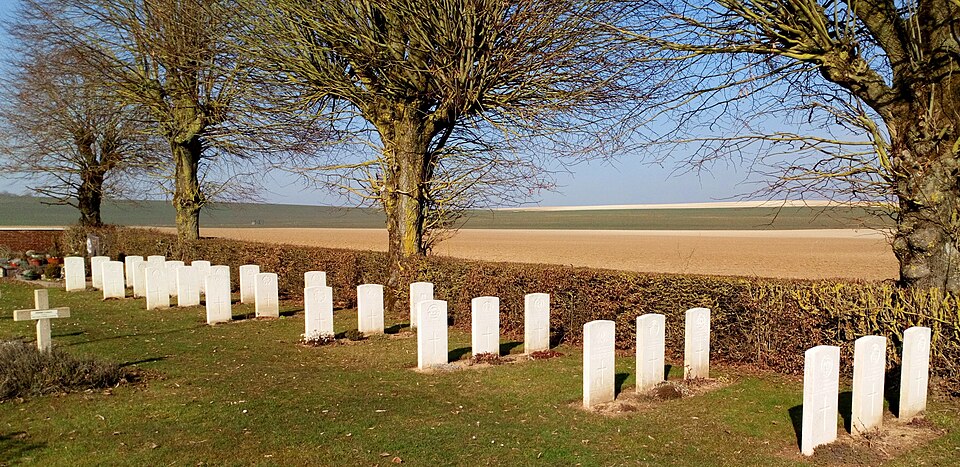
Instead of researching the Dernancourt Communal Cemetery, I am working out an itinerary for a short trip around a few Derbyshire towns. I am looking at photos of Bakewell and Ashbourne instead of trying to work out what would be written on her brother’s headstone, other than name and rank. I can’t seem to tackle the reality of visiting such a place, even in my imagination.

Just like Sarah, I’d rather be anywhere but at the cemetery, facing her grief and loss. For anyone, even a fictional character, it is tough to visit the battlefields and cemeteries of WWI and WW2. I don’t know how immediate families managed it.

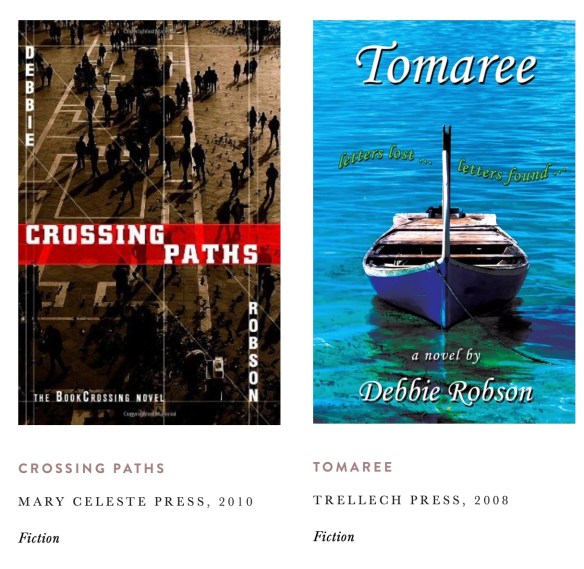
MY FOUR BOOKS!

Image courtesy of Blood Tree Literature

Anyone who is a writer and has their works published up on Amazon will know now hard it is to see all your books displayed at the one time. You can search for one book and it will come up. Oh, there it is! You go back and search for all your books, click on the link and one is always missing. At least that is what has happened to me and is still happening. A Glimpse is missing from my books and I know I will have to battle to get it added so that they are all displayed.

So you can imagine my surprise when Blood Tree Literature invited me, as a former contributor, to submit a piece for Issue 15. They accepted my cnf piece and I’m looking forward to receiving this lovely issue soon. After I received the news my piece had been accepted I investigated their contributors page, clicked on the link and discovered my four books (as I can’t display here on WordPress) staring back at me in date order from right to left in a very elegant design with a link for my website and instagram. A truly rewarding moment as a writer. Please check out this wonderful magazine.

It’s Publication Day of my chapbook!

Image and link courtesy of;Boats Against the Current

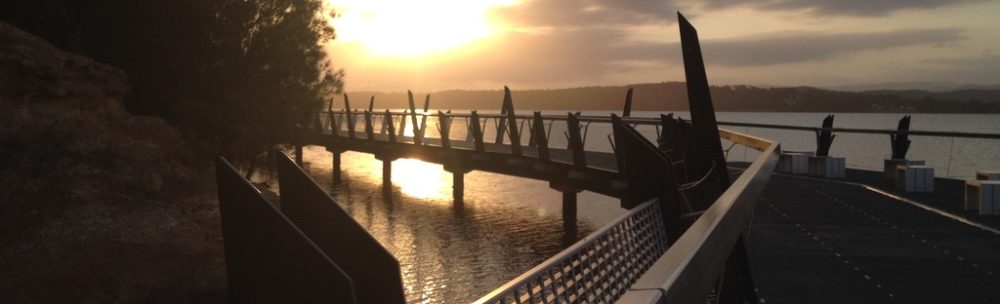
I have been very fortunate indeed in finding my publisher McKenna Deen. She originally published two of my poems in her magazine Boats Against the Current and I was so happy when she accepted my poetry chapbook recently. And now it is out in the world. Thank you too to my good friend Matthew Ward who took the amazing photograph of King Edward Park and to my poet friends, Jean Kent and Jenny Wong for the blurbs on the back. I am so proud of this chapbook and hope others enjoy it!

The tricky task of killing off a character

Image courtesy of Wikimedia commons

Yes, that’s where I’m at. She has just got to go. Part of me is surprised but the other half sort of knew all along that my main character’s best friend would not survive the second book of a planned series Towards Paris.

After all, my main character Sarah Montague is a crossover character from my novel Tomaree where we meet her at age 38 living in Shoal Bay, Port Stephens, far away from the glamour of Paris or even Sydney.

At the moment though it’s 1924 and Sarah is about to turn twenty and she is trying to find a new life for herself in Paris. Earlier her best friend Louie eloped with a young Jewish man and the couple are living somewhere outside of Paris.

Now I have to sort out the how and the where. I’m thinking some sort of heart disease and maybe Sarah will find her best friend severely ill at a sanatorium in the alps. I am having fun playing with different scenarios. For the details you’ll have to read Towards Paris when it comes out!

The Hermitage is at The Lighthouse!

Yes, that’s my novella The Hermitage. I am pleased to announce that it is now for sale at $18 at The Lighthouse shop on Saturdays and Sundays between 10-4 when there is an exhibition on.

First edition copies are also available at Flying Spanners Gallery open Saturday, Sunday and Mondays for $15.00 and second editions are also available at MacLean’s at Hamilton. As well as Amazon.com.au my book is available through me for $20 including postage. Simply comment below.

Trouble with palm trees

Image courtesy of the State Library of New South Wales

So, I have spent a ridiculous amount of time today trying to find out when the palm trees in Bridge Street were removed. I’ve been through blogs, endless google searches, at least an hour at the City of Sydney Archives, eBay, Alamy you name it. It sounds trivial but I need to know the date so that I can place a flash I have written, chronologically, in my collection. For the moment their loss features in my just written flash but now I’m obsessed with the when.

I had heart failure earlier in the day when I found a postcard featuring the palms dated 1958, a date that completely rules out the flash from being included in my collection. But I’ve since found the photo below dated by the Sydney Archives as 1954 with no palm trees. So hopefully the trees were removed sometime in the early 1950s. It’s strange but there are not very many photos of the street in the 1940s. Because of the war perhaps?

You will see that the distinctive Burns Philp building features in both photos. I have also “asked a librarian” at the State Library the question so I will keep you posted on the outcome. In the meantime I’ll probably still be searching in my sleep.

Image courtesy of the City of Sydney Archives

Update: I heard from Kate, a librarian at the State Library, on the 22nd December and she confirmed through various newspaper articles that she found in Trove that the palm trees were chopped down in August, 1946. I’m not sure what I did wrong when searching Trove but I had no luck even though I tried “Any of these words” and “All of these words” for palm trees Bridge Street. Here is a small newspaper article:

Image courtesy of Daily Telegraph 26/8/46

And time marches on and over the intervening years so many more trees have been cut down in the name of progress.

It’s Publication Day!

As my review on Goodreads says:
“I’m putting five stars as I’m very proud of this small book. The house featured in the Hermitage is inspired by four houses. They have all mingled and become one: The Hermitage at Healesville, my grandparents house at Kareela Road, Cremorne, the house in The House that Beckons by Gladys Lister and The Hermitage at Vaucluse.
I originally began writing this as a screenplay way back in 2009 but couldn’t tie up the ending. A few years ago I managed to finish the ending and cut The Hermitage in length to be eligible for a renowned radio play competition. A bad move.
Only a year or two ago I decided to look at The Hermitage again. I restored the deleted passages, added more and turned it into a novella. I hope my readers enjoy it.”

Here is a link to my publisher’s blog Alien Buddha Press where you can read the first chapter.

Here is the book at Amazon.com

Happy reading!

Characters as travelling companions

Image courtesy of Wikimedia Commons

I have returned to my manuscript Towards Paris. The writing has been interrupted because of illness, injury and my mother’s worsening dementia so it has been a relief to finally catch up with my character Sarah Linden, nee Montague.

            She has arrived in London after a five and a half week voyage from Australia and is planning some sightseeing over the next few days. She is about to book into a boarding house on Montague Street and will be picking up her pass-book from the Orient Line office on Monday. In the meantime she will do some sightseeing just as I did fifty two years later. Unlike me, my character is gay and, as a lesbian in the 1920s, life can be a bit tricky but she has a lot of things to do other than meet a woman friend. She has a trip to France to plan and a visit to Chelsea to meet her best friend Louie’s uncle. Hopefully he will have a recent address for her. In Paris Next Week Louie married a Frenchman and they are living somewhere on the continent. Louie has not been the best of letter writers.

            Although I know I am dictating Sarah’s movements with my writing and research, it often doesn’t feel like that. It feels more like I am visiting her in the 1920s. I’m giving her odd bits of advice, putting the odd challenge in her way and I’m sure together we will enjoy London. I’ll be her confidante as she negotiates her new life in London and Paris. It’s all very exciting and like a beloved friend’s company, I find it soothes me to spend time with her. If that makes me odd, so be it, as Sarah would say. 

Following Strange Urges

Image courtesy of Alchetron

I should be searching for images of Toulon France as it appeared in the 1920s, particularly the harbour as viewed from a cruise ship. I also need to wade through an endless list of books on Paris in the 1920s. The Lost Generation. How can I recreate that iconic time unless I know the history? Who was where and when? Where would my character go when she first arrives in London? And later in Paris. Where can she possibly get some sort of job? If I don’t have these necessary facts which will form the skeleton of my narrative, I simply can’t progress any further with this manuscript, Towards Paris.

Yet I am doing none of these things. Instead I am suddenly fascinated by a little known English writer Jan Struther, the pen name of Joyce Anstruther, later Joyce Maxtone Graham and finally Joyce Placzek. I found this beguiling image in the Australian Women’s Weekly icon edition 15 the other day. It was featured in an article on Greer Garson who of course starred in Mrs Minniver, the famous movie which persuaded the Americans to finally enter WW2. From the book by Jan Struther.

I am waiting anxiously for my pay to hit my account so I can buy the kindle version of The Real Mrs Minniver written by Ysenda Maxtone Graham, Joyce’s granddaughter. I am not sure why I have this urgency to read the biography but I am fascinated by this young woman in her print dress, sitting in the back garden of somewhere, with her small dog. There is a long fence in the background and a strange sort of wooden structure. I’m guessing the image is from the 1930s. She looks calm but the dog appears anxious looking off to the side at someone or something. I love the headband. The simple innocence of it. Yet her life was complicated and ultimately tragic.

How much will reading about this woman help my research? I have no idea but I have been, for a long time, interested in the arcs of people’s lives according to when and where they were born. What opportunities were available at the time, what turbulent decades were ahead as they reached maturity. These things are so important and how they affect each individual are what makes studying different lives fascinating. Joyce was born three years before my fictional character Sarah who was born in Sydney. Joyce was born in the UK in 1901 but I can’t wait to read about her working life in England in the 1920s (if she did work as a young woman). Within her life, I’m hoping there is inspiration for my character’s next few years as she steps off the ship in Tilbury. A long shot? Possibly. But you never know.

Navigating the Past

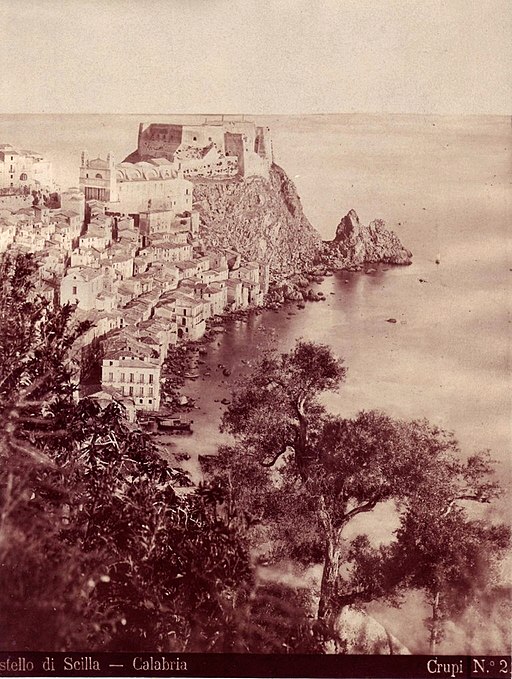
Scilla Calabria – image courtesy of Wikimedia Commons

It seems every time I put one of my characters in a ship, I have a nightmare with the research. In my manuscript entitled I Remember the White I couldn’t even find a suitable ocean liner for my character Miss Summerville to travel to Macedonia in during the last part of WWI. See my blog post from ten years ago here.

Now I’m nearing the end of my character Saran Linden’s voyage on the SS Ormonde in 1924. It’s been challenging to research as well. For the most part what is tricky is trying to find the coastlines and their appearance nearly 100 years ago. Youtube has quite a few videos travelling down the Suez Canal and cruising through the Straits of Messina but that is in this century and obviously the coastline has changed since the 1920s. 

Instead I have been looking at diaries of the period and have found a brief but useful one written by an Australian rower on the Ormonde in 1924. He’s on his way to compete in the 1924 Paris Olympics. I’ve also found quite a lot of photos of the Suez Canal so have been able to complete the scenes detailing what Sarah sees from the Ormonde when she is on deck. However there are not as many photos of the Straits of Messina so currently I’m struggling. Wish me luck in finding more as Sarah can’t wait for the ship to pass through the straits between Sicily and Calabria, Italy.